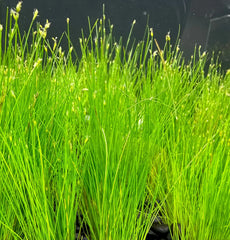
Dwarf Hairgrass Plant Care Guide (Eleocharis Parvula)
Dwarf Hairgrass (Eleocharis parvula) is one of the most popular grass-like carpeting plants in the freshwater aquarium hobby. With its fine, narrow blades that grow in dense, lawn-like clusters, Dwarf Hairgrass creates the appearance of a perfectly manicured underwater meadow. Native to wetlands across North and South America, Europe, and Asia, this plant is a top choice for aquascapers building Iwagumi-style layouts, nature aquariums, and any tank seeking a classic grass-carpet aesthetic. With the right lighting and care, Dwarf Hairgrass produces a stunning green foreground that transforms any planted aquarium into a vibrant underwater landscape.
Dwarf Hairgrass Plant Overview
-
Common Name: Dwarf Hairgrass
-
Scientific Name: Eleocharis parvula
-
Origin: North America, South America, Europe, Asia
-
Placement: Foreground
-
Maximum Height: 2–4 inches
-
Growth Rate: Moderate
-
Care Level: Moderate
-
Lighting Requirements: Medium to High
-
CO2 Requirements: Beneficial, not strictly required
-
Temperature: 68–82°F
-
pH Range: 6.5–7.5
Dwarf Hairgrass is often confused with its taller relative Eleocharis acicularis, but parvula remains shorter and more suitable for foreground planting.
Why Dwarf Hairgrass Is One of the Best Carpeting Plants
Dwarf Hairgrass remains a benchmark carpeting plant in the hobby thanks to its grass-like elegance and ability to create a naturalistic meadow appearance.
Benefits of Dwarf Hairgrass include:
-
Creates a beautiful, grass-like green carpet
-
Spreads through underground runners for natural propagation
-
Compatible with shrimp tanks and community aquariums
-
Helps oxygenate the water column
-
Ideal for Iwagumi and nature aquascape styles
-
Provides a soft, natural ground cover for fry
Dwarf Hairgrass Lighting & CO2 Requirements
Dwarf Hairgrass requires more lighting than many beginner carpeting plants. Insufficient light causes the grass to grow tall and thin, defeating the carpet effect.
For best results:
-
Use medium to high planted tank lighting
-
Provide 8–10 hours of daily lighting
-
Position lighting evenly across the foreground
-
Pair strong lighting with CO2 for dense growth
While Dwarf Hairgrass can survive without CO2, it grows much more slowly and is more susceptible to algae issues. CO2 injection is strongly recommended for serious carpeting results.
Without CO2
With CO2
Best Substrate for Dwarf Hairgrass
Dwarf Hairgrass is a heavy root feeder that requires nutrient-rich substrate to develop a thick, healthy carpet.
Recommended substrate types include:
-
Aquasoil (strongly preferred)
-
Nutrient-rich planted tank substrate
-
Fine gravel or sand with root tabs
A 2–3 inch deep substrate bed allows roots to spread fully and runners to extend horizontally.
How to Plant Dwarf Hairgrass
To plant Dwarf Hairgrass successfully:
-
Divide the plant into small clumps of 8–10 blades
-
Use sharp aquascaping tweezers to plant each clump
-
Bury the roots fully, but keep the green blades above the substrate
-
Space clumps 1–2 inches apart for fast carpeting
-
The "dry start method" can be used to establish a dense carpet before flooding
Within a few weeks, horizontal runners will begin filling the gaps between clumps.
Dwarf Hairgrass Maintenance
Regular trimming helps Dwarf Hairgrass maintain a thick, dense carpet and prevents lower blades from being shaded out.
Maintenance tips:
-
Trim every 2–4 weeks once the carpet matures
-
Use sharp scissors to top the grass evenly
-
Vacuum trimmed clippings to prevent decay
-
Dose comprehensive liquid fertilizer regularly
Trimming encourages horizontal spreading rather than vertical growth.
Ideal Tank Mates for Dwarf Hairgrass
Dwarf Hairgrass pairs well with peaceful freshwater community fish and is a favorite in shrimp tanks.
Compatible tank mates include:
-
Cherry Shrimp, Crystal Shrimp, and Amano Shrimp
-
Tetras, Rasboras, and Danios
-
Bettas and Gouramis
-
Corydoras Catfish
-
Otocinclus
-
Small peaceful livebearers
Avoid bottom-disturbing fish like cichlids and goldfish that may uproot the delicate carpet.
Common Dwarf Hairgrass Problems
Grass Growing Tall Instead of Spreading
Indicates insufficient lighting. Increase light intensity to promote horizontal runner growth.
Yellowing or Browning Blades
Indicates nutrient deficiency or insufficient CO2. Add comprehensive fertilizer and consider CO2 injection.
Melting After Planting
Common during the transition from emersed to submerged growth. New growth will replace melted portions.
Algae Growth on Blades
Often caused by high light without sufficient CO2 or fertilization. Balance the light-nutrient-CO2 trio.
Final Thoughts
Dwarf Hairgrass is a stunning carpeting plant that brings the classic meadow look to freshwater aquariums. While slightly more demanding than easier carpet options like Monte Carlo, the elegant grass-like appearance and natural runner-based propagation make Dwarf Hairgrass a top choice for serious aquascapers. With proper lighting, nutrient-rich substrate, and patient maintenance, Dwarf Hairgrass will reward you with a dense, beautiful underwater lawn that transforms any aquascape into a living natural landscape.
Looking to create a stunning underwater meadow? Browse AquaticMotiv's collection of live aquarium plants, Dwarf Hairgrass portions, and aquascaping-ready foreground plants shipped directly to your door.