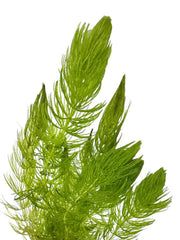
Hornwort Plant Care Guide (Ceratophyllum Demersum)
Hornwort (Ceratophyllum demersum) is one of the most popular and resilient aquatic plants in the freshwater aquarium hobby. Found naturally on every continent except Antarctica, Hornwort is a true cosmopolitan plant celebrated for its bushy, feathery foliage, rapid growth, and exceptional water-purifying abilities. Hornwort thrives without substrate, making it an ideal choice for goldfish tanks, fry-rearing aquariums, and minimalist aquascapes. Whether planted, floated, or anchored, this hardy plant offers powerful nutrient absorption, oxygenation, and shelter, making it a workhorse plant for aquarists at every experience level.
Hornwort Plant Overview
-
Common Name: Hornwort, Coontail
-
Scientific Name: Ceratophyllum demersum
-
Origin: Worldwide (cosmopolitan distribution)
-
Placement: Floating, Background
-
Maximum Length: Up to 10 feet (typically trimmed shorter)
-
Growth Rate: Very Fast
-
Care Level: Very Easy
-
Lighting Requirements: Low to High
-
CO2 Requirements: Not required
-
Temperature: 59–86°F
-
pH Range: 6.0–7.5
Hornwort is technically rootless—it absorbs all nutrients directly from the water column through its leaves and stem.
Why Hornwort Is One of the Best Aquarium Plants for Beginners
Hornwort has earned legendary status in the aquarium hobby thanks to its toughness, fast growth, and powerful water-cleaning properties. It is often recommended for new tank cycling and algae control.
Benefits of Hornwort include:
-
Absorbs massive amounts of nitrates, ammonia, and phosphates
-
Releases allelopathic compounds that suppress algae growth
-
Provides excellent shelter for fry, shrimp, and small fish
-
Compatible with cold-water tanks including goldfish setups
-
No substrate required for healthy growth
-
Reproduces rapidly through simple fragmentation
Hornwort Lighting & CO2 Requirements
Hornwort tolerates a remarkably wide range of lighting conditions. It grows under low light but performs best with moderate to high intensity.
For best results:
-
Use any level of aquarium lighting
-
Provide 8–10 hours of daily lighting
-
Allow consistent light for steady growth
CO2 injection is not necessary for Hornwort. It already grows rapidly in standard aquarium water without supplementation.
Without CO2
With CO2
Best Placement for Hornwort
Hornwort can be left floating, weighted at the bottom, or anchored in substrate. Since it has no roots, substrate type is irrelevant to its health.
Recommended placement approaches include:
-
Floating freely for surface coverage and fry shelter
-
Bunched and weighted at the back of the tank
-
Anchored with plant weights to stand vertically
The stems can also be wrapped around hardscape for a natural, draping appearance.
How to Add Hornwort to Your Aquarium
To establish Hornwort successfully:
-
Inspect stems and remove any damaged or brown sections
-
Place into the tank floating or anchored as desired
-
Avoid burying the stems deeply, as they will rot
-
Use plant weights to keep bunches in position
-
Allow 1–2 weeks for adjustment
Hornwort often sheds needles when first introduced to a new tank but rebounds quickly.
Hornwort Maintenance
Because Hornwort grows so quickly, regular trimming is essential to prevent it from overtaking the aquarium.
Maintenance tips:
-
Trim weekly or biweekly to control length
-
Remove yellowed or brown stems promptly
-
Vacuum any shed needles during water changes
-
Dose liquid fertilizer if leaves pale
Cuttings can be replanted, shared, or discarded depending on your needs.
Ideal Tank Mates for Hornwort
Hornwort is one of the most universally compatible aquarium plants and thrives with nearly any peaceful species.
Compatible tank mates include:
-
Goldfish (one of the few plants they will not destroy quickly)
-
Tetras, Rasboras, and Danios
-
Mollies, Platies, Guppies, and Swordtails
-
Corydoras Catfish
-
Cherry Shrimp and Amano Shrimp
-
White Cloud Mountain Minnows
-
Bettas
Avoid herbivorous cichlids and crayfish that may aggressively destroy stems.
Common Hornwort Problems
Needle Shedding
The most frequent issue, caused by sudden parameter shifts when first introduced. The plant will recover and grow new needles.
Yellowing Stems
Suggests nutrient deficiency. Dose comprehensive liquid fertilizer to restore color.
Rotting at the Base
Caused by burying stems in substrate. Float the plant or use plant weights instead.
Excessive Growth
A common "problem" that simply requires more frequent trimming.
Final Thoughts
Hornwort is one of the most dependable aquarium plants ever introduced to the hobby. Its bulletproof nature, fast growth, and powerful nitrate absorption make it the perfect choice for new aquarists, fishkeepers battling algae, and anyone setting up a goldfish or fry tank. Whether floated freely or anchored as a lush background plant, Hornwort delivers consistent, low-maintenance performance that few other species can match.
Looking for a hardy, fast-growing plant for your aquarium? Browse AquaticMotiv's collection of live aquarium plants, Hornwort bunches, and beginner-friendly aquatic plants shipped directly to your door.