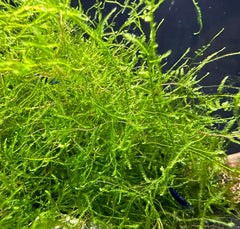
Java Moss Plant Care Guide (Taxiphyllum Barbieri)
Java Moss (Taxiphyllum barbieri) is arguably the most popular and forgiving aquatic moss in the freshwater aquarium hobby. Native to Southeast Asia, this hardy moss adapts to almost any tank condition, making it a staple for beginners and advanced aquascapers alike. Java Moss attaches readily to rocks, driftwood, mesh, and even decorations, allowing aquascapers to create natural-looking surfaces, hiding spots for fry and shrimp, and lush green textures throughout the aquarium. Whether you are building a breeding tank, shrimp habitat, or detailed nature aquascape, Java Moss is a dependable choice that delivers consistent results.
Java Moss Plant Overview
-
Common Name: Java Moss
-
Scientific Name: Taxiphyllum barbieri
-
Origin: Southeast Asia
-
Placement: Foreground, Midground, Hardscape Attachment
-
Maximum Height: 3–4 inches
-
Growth Rate: Slow to Moderate
-
Care Level: Very Easy
-
Lighting Requirements: Low to High
-
CO2 Requirements: Not required
-
Temperature: 59–86°F
-
pH Range: 5.5–8.0
Java Moss is one of the most adaptable plants available, thriving in cold water, tropical setups, and everything in between.
Why Java Moss Is One of the Best Aquatic Mosses
Java Moss has earned its place as a hobby essential because of its bulletproof care requirements and extreme versatility. Unlike many aquatic plants, it does not need substrate, CO2, or specialized lighting to flourish.
Benefits of Java Moss include:
-
Tolerates an extremely wide range of water parameters
-
Attaches naturally to driftwood, rocks, and mesh
-
Provides cover for fry, shrimplets, and biofilm production
-
Excellent for breeding tanks and shrimp colonies
-
Compatible with cold-water and tropical aquariums
-
Affordable and widely available
Java Moss Lighting & CO2 Requirements
Java Moss grows under nearly any aquarium lighting conditions. Lower lighting produces a looser, wispier appearance, while stronger lighting encourages denser, more compact growth.
For best results:
-
Use any level of planted tank lighting
-
Provide 6–10 hours of light daily
-
Keep lighting consistent to discourage algae growth on the moss
-
Pair stronger lighting with fertilization to outcompete algae
CO2 injection is not necessary for Java Moss. Added CO2 can speed up growth and produce more compact forms, but is entirely optional.
Without CO2
With CO2
-
Tighter, denser growth pattern
-
Improved color and structure
-
Faster recovery after trimming
Best Placement for Java Moss
Java Moss does not require substrate because it absorbs nutrients directly from the water column through its leaves and rhizoids. It can be attached to any hardscape surface.
Recommended attachment methods include:
-
Tying with cotton thread to driftwood or stone
-
Securing with super glue gel (cyanoacrylate)
-
Sandwiching between mesh sheets to create moss walls or carpets
-
Wedging into hardscape crevices
The moss will eventually anchor itself permanently as rhizoids attach to the surface.
How to Attach Java Moss
To establish Java Moss successfully:
Spread the moss in a thin, even layer over the target surface
-
Secure it with cotton thread, fishing line, or aquarium-safe super glue
-
Trim away excess to maintain a tidy initial shape
-
Place in moderate flow areas to deliver nutrients
-
Allow 2–4 weeks for natural attachment
Once attached, the binding thread can be removed if it has not dissolved on its own.
Java Moss Maintenance
Java Moss benefits from periodic trimming to prevent it from becoming overgrown and trapping detritus inside the dense mass.
Maintenance tips:
-
Trim with sharp scissors every 2–6 weeks
-
Use a turkey baster to blow detritus out of the moss
-
Remove yellowed or brown sections promptly
-
Maintain steady fertilization for vibrant green color
Trimmed pieces can be replanted elsewhere or given away, since even small fragments will regrow.
Ideal Tank Mates for Java Moss
Java Moss is one of the most universally compatible aquarium plants and works well in nearly any peaceful community tank.
Compatible tank mates include:
-
Cherry Shrimp, Crystal Shrimp, and Amano Shrimp
-
Tetras, Rasboras, and Danios
-
Bettas and Gouramis
-
Corydoras Catfish
-
Killifish and small livebearers
-
Cold-water species like White Cloud Minnows
Avoid goldfish and large herbivorous fish that may tear or eat the moss.
Common Java Moss Problems
Algae Growth on the Moss
The most common issue, usually caused by excessive light, poor flow, or excess nutrients. Reduce photoperiod and improve water circulation.
Brown or Yellow Patches
Often a sign of trapped detritus or insufficient water flow. Clean the moss with a baster and improve circulation.
Slow or Sparse Growth
May indicate nutrient deficiency in the water column. Add a liquid fertilizer to support growth.
Floating Loose Pieces
Common before the moss anchors itself. Re-secure with thread or glue until rhizoids develop.
Final Thoughts
Java Moss is an outstanding choice for any freshwater aquarium and one of the easiest aquatic plants to grow. Its tolerance for varied conditions, low equipment requirements, and decorative versatility make it a perfect option for beginners, breeders, shrimp keepers, and aquascape artists. With a little trimming and a stable environment, Java Moss can transform any aquarium into a lush, green underwater landscape teeming with biological life.
Looking to add natural texture to your aquarium? Browse AquaticMotiv's collection of live aquatic mosses, Java Moss portions, and aquascaping-ready plants shipped directly to your door.