

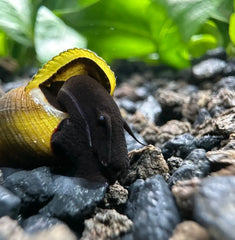
If you are eager to introduce an extraordinarily unique, curious, and prehistoric-looking creature to your freshwater aquarium, the Rabbit Snail (Tylomelania sp.) is an unmatched choice. Hailing from the ancient lake systems of Sulawesi, Indonesia, these captivating invertebrates are cherished for their long, tapered, elephant-like faces and heavily textured, conical shells. Unlike smaller, passive snails, rabbit snails are remarkably active and expressive explorers that add a wonderful dynamic to bottom-dwelling aquarium life.
To ensure these magnificent aquatic mollusks remain healthy, energetic, and beautifully shell-formed, you must provide specific habitat arrangements, precise water configurations, and proper nutritional care. Integrating them into an established system using a planted aquarium care guide can help you maintain the stable water parameters and abundant biofilm they need to thrive. This thorough guide covers everything necessary to successfully manage the rabbit snail.
Rabbit Snail Care Sheet and Ideal Parameters
Rabbit snails are relatively easy to manage once their baseline tropical criteria are met. Because they can grow quite large—frequently reaching sizes between 3 to 4 inches in length—they demand a bit more physical space and environmental stability than average tank snails.
-
Care Level: Easy - Medium
-
Minimum Tank Size: 20 Gallons
-
Water Temperature: 77F - 84F
-
pH Range: 7.6 to 8.4
-
General Hardness (GH): 6 to 8 dGH
-
Carbonate Hardness (KH): 4 to 8 dKH
-
Lifespan: Up to 3-4 Years
Shell Mineralization and Alkaline Mandates
Securing a consistent pH range between 7.6 and 8.4 is absolutely vital for the structural integrity of your rabbit snail. Their elongated, spiral shells rely heavily on calcium carbonate absorption. When aquarium water slides into acidic territory (dropping beneath 7.0), it fundamentally acts as a corrosive agent, slowly wearing away their armor. This damage presents itself as pitted surfaces, thinning segments, or white, chalky deterioration. Maintaining robust GH and KH levels supplies the essential dissolved minerals they require to preserve and build their massive shells.
Substrate and Space Safety
Unlike species that spend all their time stuck to glass, rabbit snails are dedicated ground-dwellers that love to sift through the bottom layer. It is highly recommended to use smooth sand or fine, rounded gravel. Sharp substrate can injure their sensitive, fleshy muscular feet. Additionally, because they are heavy and can occasionally uproot loosely anchored greenery, ensure your aquascaping rocks are securely situated so they cannot shift and trap a snail underneath.
Captivating Rabbit Snail Color Types
The Tylomelania genus boasts a beautiful variety of appearances, with selective imports showcasing a wide array of contrasting body ornamentations and shell structures.
-
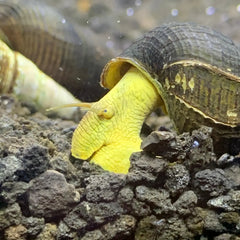
Yellow Sulawesi Rabbit Snail: The most sought-after variety, displaying a strikingly vibrant, neon-yellow or bright mustard-colored body that beautifully pops against its dark, rugged, espresso-brown shell.
-
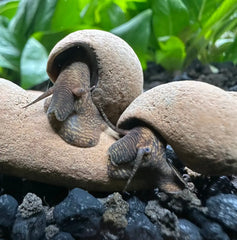
Chocolate Rabbit Snail: A handsome variation featuring a rich, chocolate-brown body paired with a deeply grooved, dark charcoal shell, giving it a wonderfully subtle, earthy aesthetic.
-
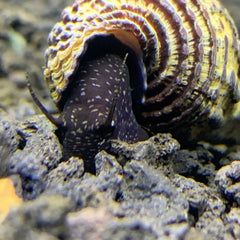
White Spotted Rabbit Snail: This variety features a dark black or deep mahogany foot dusted with intricate, tiny white dots, making it look like a starry night sky moving across your tank floor.
-
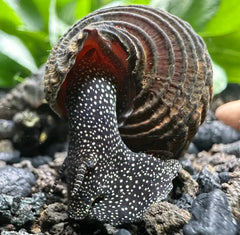
Yellow Spotted Rabbit Snail: Similar to the white-spotted variety, but adorned with brilliant, metallic gold or orange flecks across a dark velvety body, creating an incredibly exotic display.
-
Black Rabbit Snail: A sleek, fully dark morph where both the physical body and the elongated shell exhibit deep, uniform tones of charcoal, slate, or midnight black.
Feeding and Diet: Nourishing an Active Herbivore
While rabbit snails are phenomenal scavengers that willingly consume leftover fish flakes, organic debris, and decomposing plant matter, they possess a hearty appetite and must be fed an intentional, targeted diet.
Supplying Adequate Daily Nutrition
Rabbit snails are omnivorous grazers with a strong preference for decaying plant material and commercial bottom-feeder pellets. To maintain their weight and encourage steady shell growth, supplement their environment with:
-
Sinking Invertebrate Foods: High-quality algae wafers, sinking shrimp pellets, and calcium-enriched bottom tablets are perfect dietary baselines.
-
Softened Fresh Greenery: They thoroughly enjoy blanched vegetables such as green beans, spinach, zucchini, and carrots. Boil the vegetables for a few minutes until soft, allow them to cool down completely, and place them on the substrate. Always pull out any leftovers after 24 hours to keep the water clean.
Behavior, Slow Breeding, and Tank Mates
Rabbit snails are incredibly peaceful, docile inhabitants. While they might occasionally nibble on soft, delicate live plants if they are underfed, they generally prefer grazing on melting leaves, biofilm, and specialized foods rather than destroying healthy aquascapes.
Unique Reproduction: No Risk of Inundation
One of the most appealing aspects of the rabbit snail is their unique, controlled reproductive process. They are not hermaphroditic and they do not lay unsightly jelly clusters of eggs. Instead, rabbit snails give birth to one fully formed live baby at a time. The female releases a tiny, translucent slime pod containing a miniature snail that instantly emerges and begins crawling around the tank floor. This incredibly slow reproduction rate guarantees your aquarium will never suffer an uncontrolled population boom.
Ideal Tank Mates
Because rabbit snails are entirely non-aggressive and move at a leisurely pace, they must only reside alongside peaceful community tank companions.
-
Perfect Neighbors: Gentle community fish such as tetras, guppies, corydoras catfish, rasboras, hatchetfish, mystery snails, nerite snails, and various freshwater dwarf shrimp. They easily coexist with peaceful fish because they lack long, aggressive behaviors and can retreat completely into their spiraled shells if nudged.
-
Incompatible Species: Keep them completely separated from known predatory fish and aggressive invertebrates. Large cichlids, loaches, pufferfish, and Assassin Snails will relentlessly bully or consume your rabbit snails.
The Absolute Copper Restriction
Never allow medications, snail-control chemicals, or intensive plant additives containing copper into an aquarium housing rabbit snails. Copper serves as a lethal toxin to invertebrates and will swiftly decimate your snail population, even in minute concentrations. Always verify the chemical components of any additive before introducing it to your aquarium ecosystem.
Freshwater Aquarium Care Guides
Shop related: All Rabbit Snails, Water Care, Food, Hardscape, Botanicals, Parameter Test Strips.
Related Blogs: Why are rabbit snails the favorites, Which snail pack is best for a balanced aquarium, Can rabbit snails live with other snails.