

If you are looking for a peaceful, efficient, and visually striking addition to your freshwater aquarium, the Nerite Snail (Neritina sp.) is a premier choice. Widely recognized as the single best algae-eating invertebrate in the aquatic hobby, these small scavengers are the perfect cleanup crew. They spend their active hours scouring glass, hardscape, and decorations, leaving a completely spotless path behind them.
Utilizing a comprehensive aquarium plants and cleanup crew guide can help you perfectly balance their grazing habits with the rest of your ecosystem's maintenance needs. To keep these beautiful creatures thriving, active, and fully healthy, you need to understand their specific environmental, water chemistry, and dietary requirements. This comprehensive guide covers everything you need to know about caring for the nerite snail.
Nerite Snail Care Sheet and Ideal Parameters
Nerite snails are low-maintenance, making them an excellent option for beginners and seasoned aquarists alike. Because they stay relatively small—typically topping out around 0.75 to 1 inch in diameter—they adapt beautifully to modest setups without creating a massive bioload.
-
Care Level: Very Easy
-
Minimum Tank Size: 10 Gallons
-
Water Temperature: 72-82
-
pH Range: 7.4 to 8.0
-
General Hardness (GH): 6 to 8 dGH
-
Carbonate Hardness (KH): 2 to 12 dKH
-
Lifespan: Up to 3 Years
Shell Protection and Mineral Needs
Maintaining a stable pH between 7.4 and 8.0 is critical for the long-term survival of your nerite snail. Their shells are composed of calcium carbonate, meaning that soft, acidic water (anything below a neutral 7.0) will slowly corrode and dissolve their outer protection. This deterioration appears as a whitish, chalky texture, deep pitting, or eventual holes. Ensuring your GH and KH are within the recommended limits gives them the vital minerals needed to self-repair and build sturdy shells.
The Escape Artist Warning
Nerite snails naturally inhabit tidal environments where rivers meet the ocean, meaning they are biologically programmed to crawl out of the water to forage. Because of this, they are legendary escape artists in home aquariums. Always secure your tank with a tight-fitting hood or lid to prevent a stray snail from climbing out and drying out on the floor.
Popular Nerite Snail Varieties and Types
One of the highlights of keeping nerite snails is the gorgeous array of patterns, textures, and colors available. While they share identical care requirements, selective varieties look entirely unique.
-
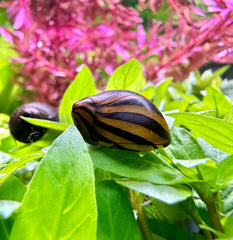
Zebra Nerite Snail: The most iconic variety, featuring bright golden-yellow shells beautifully contrasted by distinct, jagged black stripes resembling a zebra pattern.
-
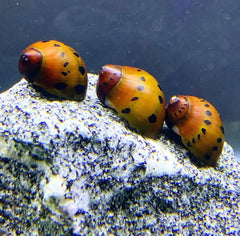
Tiger Nerite Snail: Similar to the Zebra, but the stripes are replaced by deeper, amber-toned coloration with subtle, dark step-like patterns or dashed lines.
-
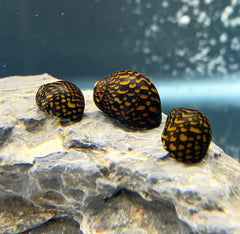
Batik Nerite Snail: A gorgeous, highly stylized variety named after traditional textile art. Their shells feature intricate, woven-looking patterns of dark brown, gold, and black.
-
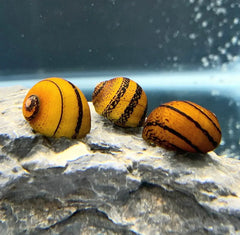
O-Rin Nerite Snail: A unique variety known for its glossy, smooth shell that features bold, distinct banding patterns tracing the swirl of the shell, often showcasing dark, rich tones against a cream background.
-
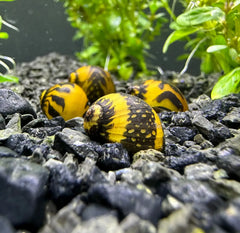
Yellow Racer Nerite Snail: A stunningly vibrant and rarer type where the shells look almost hand-painted. They boast brilliant yellow bands running alongside contrasting black racing stripes.
-
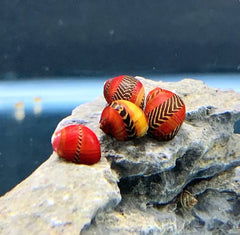
Red Racer Nerite Snail: A premium color morph of the racer line, boasting brilliant orange-to-ruby-red coloration broken up by a sequence of dark, V-shaped chevron or racing patterns.
-
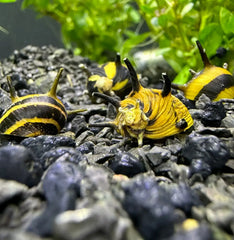
Zebra Thorn / Horned Nerite Snail: A distinct, miniature variety featuring tiny, harmless horn-like protrusions growing along the whorls of their yellow and black striped shells. Their smaller size makes them perfect for nano aquariums.
Feeding and Diet: Fueling Your Cleanup Crew
Nerite snails are voracious herbivores that consume massive quantities of brown diatoms, film algae, and green spot algae.
Ensuring They Get Enough Food
Because they are so incredibly efficient at cleaning, the biggest risk to a nerite snail is actually running out of natural food. If your tank glass and rocks are completely pristine, you must supplement their diet:
-
Algae Wafers & Spirulina Pellets: Drop high-quality sinking plant wafers into the tank at night when the snails are highly active.
-
Blanched Fresh Veggies: They enjoy soft, boiled vegetables like zucchini, kale, or spinach. Boil the veggies for a couple of minutes to soften them up, let them cool, and anchor them to the bottom. Remove any uneaten portions after 24 hours to preserve water quality.
Behavior, Breeding, and Tank Mates
Nerite snails are incredibly peaceful and completely safe to keep around delicate live aquatic plants. They do not eat live greenery; they only clean the algae growing on top of the leaves.
The Ultimate Freshwater Benefit: No Population Explosions
A major advantage of nerite snails is that they cannot reproduce or overrun a freshwater aquarium. While a female nerite snail will frequently lay tiny, hard white egg capsules on driftwood, rocks, and glass, these eggs absolutely require brackish water (semi-salty water) to successfully hatch into larvae. In a standard freshwater tank, the eggs will simply dissolve or can be scrubbed away, ensuring your population remains perfectly controlled.
Ideal Tank Mates
Because they have a short, rounded profile and can tuck their soft bodies entirely flat against a hard surface, nerite snails are safe from many minor annoyances.
-
Great Companions: Peaceful community fish like tetras, guppies, rasboras, corydoras catfish, and dwarf shrimp varieties (such as Cherry or Amano shrimp). Most Betta fish tolerate nerite snails perfectly because the snail has no long, trailing tentacles for the fish to nip at.
-
Avoid Predatory Species: Keep them far away from known invert-eaters like loaches, pufferfish, large aggressive cichlids, or Assassin Snails.
A Critical Note on Copper
Never expose your aquarium to medications, algaecides, or plant fertilizers that contain copper. Copper is a potent invertebrate toxin and will quickly kill your nerite snails, even in microscopic doses. Always check the ingredient list on any product before adding it to a tank with snails.
Freshwater Aquarium Care Guides
Shop related: All Nerite Snails, Live Plants, Water Care, Algae Wafers, Water Test Strips, Botanicals.
Related blogs: Why snails are essential for a self-sustained ecosystem, Why nerite snails are the best algae eaters, Can nerite snails reproduce in freshwater? Myth vs Fact, Nerite snail vs Mystery snail.