

If you are looking for a peaceful, active, and fascinating addition to your freshwater aquarium, the Mystery Snail (Pomacea bridgesii) is a stellar choice. Unlike many aquatic snails that hide away or overpopulate a tank overnight, mystery snails are true personalities. They zip across the glass, climb to the top of decorations to "parachute" down to the substrate, and interact dynamically with their environment.
Pairing them with the right ecosystem is key, and following a freshwater planted tank guide ensures your aquatic environment remains balanced and healthy for active invertebrates. To keep these magnificent invertebrates healthy, active, and beautiful, you need to understand their specific habitat, water chemistry, and dietary requirements. This comprehensive guide covers everything you need to know about the mystery snail.
Mystery Snail Care Sheet and Ideal Parameters
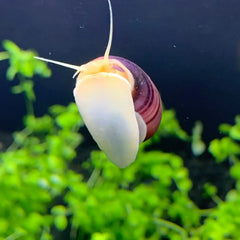
Mystery snails are hardy creatures, making them an excellent choice for hobbyists of all experience levels. However, because they grow significantly larger than other snails, like nerites - often reaching the size of a golf ball, they require intentional care and proper environment management.
-
Care Level: Very Easy
-
Minimum Tank Size: 10 Gallons
-
Water Temperature: 72F - 82F
-
pH Range: 7.4 to 8.0
-
General Hardness (GH): 6 to 8 dGH
-
Carbonate Hardness (KH): 2 to 12 dKH
-
Lifespan: Up to 3 Years
The Importance of Alkaline Water
Maintaining a pH between 7.4 and 8.0 is critical for the long-term survival of your mystery snail. Their shells are composed primarily of calcium carbonate. If the water drops below a neutral 7.0 and becomes acidic, the water will slowly corrode and dissolve their shell. This leads to a chalky texture, thinning, pitting, and eventual holes that can be fatal to the snail. Steady GH and KH levels ensure there are plenty of dissolved minerals in the water column to support healthy shell development.
Secure Your Tank Lid
Mystery snails are notorious escape artists. They are highly curious and will frequently climb above the waterline to explore or seek a place to lay eggs. Always secure your aquarium with a tight-fitting hood or lid to prevent an accidental fall onto the floor.
The 8 Colorful Variations of Mystery Snails
One of the reasons this species is so beloved in the aquarium hobby is its incredible color polymorphism. Selective breeding has produced eight distinct, widely recognized color morphs based on three genetic traits: shell color, body (foot) color, and the presence of stripes.
1. Golden Mystery Snail
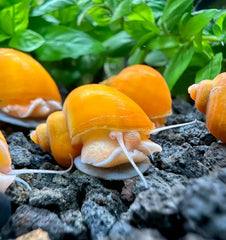
The Golden is one of the most iconic and recognizable varieties. It features a rich, solid lemon-yellow to deep orange shell paired with a light, creamy-white or light orange body.
2. Ivory Mystery Snail
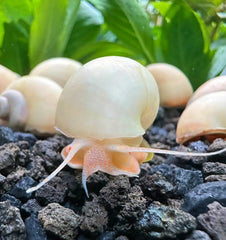
The epitome of minimalism and elegance, the Ivory mystery snail possesses a clean, creamy-white shell and a matching pale white body with zero dark pigmentation. They provide a beautiful contrast against dark substrate and green plants.
3. Black Mystery Snail
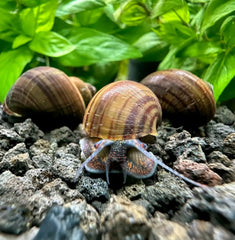
This variation closely mirrors the wild-type snails found in nature. They feature a deep brown to pitch-black shell—often adorned with subtle, dark vertical bands—paired with a dark charcoal or dark purple foot.
4. Blue Mystery Snail
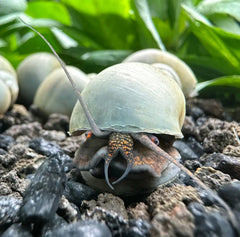
A striking and highly sought-after morph, the Blue mystery snail features a clear, un-pigmented shell that looks steely grey or light blue because of the dark charcoal or near-black body underneath it.
5. Jade Mystery Snail
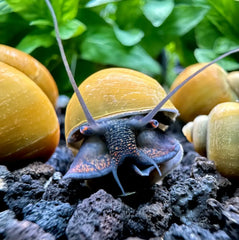
The Jade variety is a gorgeous, exotic combination. It features a rich, translucent yellow-green shell over a dark charcoal body. The dark body underneath shines through the yellow shell, creating a vibrant, olive-green gemstone look.
6. Purple Mystery Snail
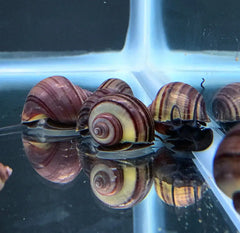
A true crown jewel for collectors, the Purple mystery snail exhibits a stunning dark purple shell covered in dark vertical stripes. This unique shell is paired with a dark purple or charcoal-colored body.
7. Magenta Mystery Snail
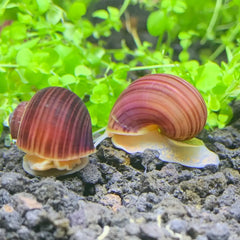
Often confused with the purple variety, Magenta snails feature a much brighter, playful pinkish-red shell that is beautifully contrasted by a light, creamy-white body. They are a magnificent pop of color in any aquarium.
8. Chestnut Mystery Snail
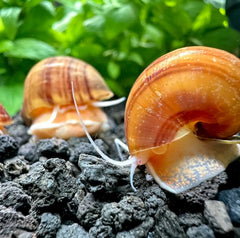
The Chestnut variety displays a warm, honey-brown or tan shell with distinct darker brown stripes running down the swirls. This patterned shell sits atop a light, cream-colored body.
Feeding and Diet: Keeping the Shell Strong
While mystery snails are opportunistic scavengers that eat leftover fish food, detritus, and decaying plant matter, they cannot survive on tank scraps alone. They are voracious eaters that require a varied, calcium-rich diet to fuel their rapid shell growth.
What to Feed Your Mystery Snail
-
Sinking Pellets: High-quality algae wafers, shrimp pellets, and bottom-feeder tablets are great dietary staples.
-
Blanched Vegetables: They absolutely love fresh veggies. Periodically feed them blanched zucchini, kale, spinach, green beans, or cucumber. Boil the vegetables for 2 to 3 minutes to soften them, let them cool entirely, and drop them in. Remove any uneaten portions within 24 hours to prevent water fouling.
-
Calcium Supplements: Diet is the easiest way to prevent shell deterioration. Feed them foods explicitly enriched with calcium.
To easily boost the calcium levels in your aquarium, drop a small piece of natural cuttlebone (commonly found in the bird section of pet stores) directly into your filter compartment or bury it slightly in the substrate. It will slowly dissolve, keeping the water mineral-rich. Although you may need additional supplements, this is an easy and quick way to start getting that calcium content up.
Behavior, Lifespan, and Tank Mates
Mystery snails live up to 3 years when kept in optimal conditions. Their lifespan is heavily dictated by water temperature; keeping them at the higher end of their range increases their metabolic rate, causing them to move faster and grow quicker, but shortening their overall lifespan.
Anatomy and Breathing
Mystery snails are unique because they possess both gills and a lung. They use a specialized organ called a siphon—which looks like a long, flexible tube or snorkel on the left side of their head—to breathe atmospheric air. They will frequently climb to the surface, extend their siphon out of the water to take a big gulp of air, and then swim or float back down.
Ideal Tank Mates
Because mystery snails are completely defenseless, they should only be kept with peaceful community tank mates. When threatened, their only defense is to pull completely into their shell and close their operculum (the protective trapdoor).
-
Excellent Companions: Small tetras, guppies, corydoras catfish, rasboras, nerite snails, rabbit snails, and dwarf shrimp (like Cherry or Amano shrimp). Most Betta fish tolerate mystery snails well, though exceptionally aggressive bettas may occasionally nip at their long, flowing eye tentacles.
-
Companions to Avoid: Never house mystery snails with predatory or nippy species. Goldfish, large cichlids, loaches (like Clown or YoYo loaches), and pufferfish will view your mystery snail as a meal.
A Critical Warning About Medications
Never use any aquarium medications or water treatments that contain copper in a tank housing mystery snails. Copper is a potent invertebrate toxin and will quickly kill your snails, even in microscopic doses. Always check the ingredient list on fish medications carefully before treating the main aquarium.
Freshwater Aquarium Care Guides
Shop related: All Mystery Snails, Water Care, Substrate, Hardscape, Algae Wafers, Live Plants.
Other blogs: Nerite vs Mystery Snail: Best choice for your aquarium, Why snails are essential for a self-sustained ecosystem, What makes mystery snails ideal for beginner tanks.