

Betta fish (Betta splendens), often called Siamese fighting fish, are among the most popular aquatic pets in the world. Known for their breathtaking colors, flowing fins, and surprisingly bold personalities, these beautiful fish make a fantastic addition to many homes.
Unfortunately, a massive amount of misinformation surrounds proper betta fish care. Many people mistakenly believe these hardy creatures can survive long, healthy lives in tiny plastic bowls or decorative vases. To optimize the internal biological conditions of their home right from the start, our freshwater planted tank guide offers critical context on managing nitrogen parameters and cycling layouts safely.
To truly thrive, bettas require a specific environment, proper nutrition, and routine maintenance.
This comprehensive care guide covers everything you need to know about setting up a tank, water parameters, diet, and disease prevention to maximize your betta fish lifespan.
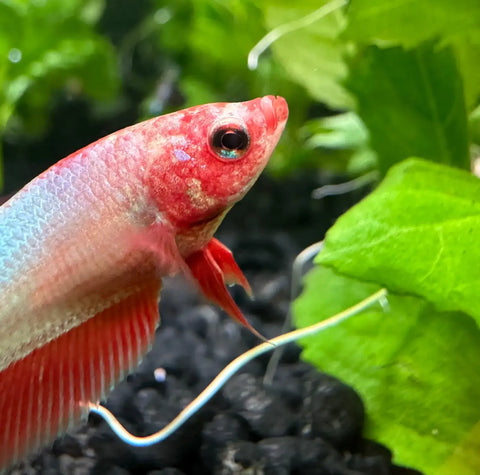
Understanding the Betta Fish: Origin and Anatomy
To care for a pet properly, it helps to look at where they come from. Wild bettas are native to Southeast Asia, particularly the shallow waters, rice paddies, and slow-moving streams of Thailand, Cambodia, and Vietnam.
Because their natural habitats experience dry seasons and low oxygen levels, bettas evolved a specialized organ called the labyrinth organ. This fascinating anatomical feature allows them to breathe atmospheric air directly from the water's surface. While this adaptation allows them to survive in poor conditions temporarily, it is not an excuse to keep them in stagnant, unfiltered water.
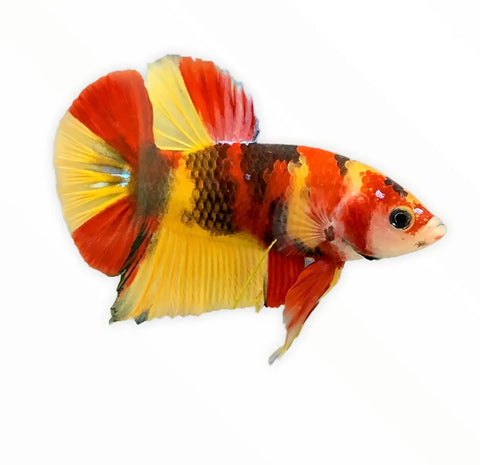
Modern captive-bred bettas look vastly different from their dull, short-finned wild ancestors. Breeders have selected for striking variations like the Halfmoon betta (featuring a tail fin that opens in a wide 180-degree semi-circle), the Crowntail (with spike-like fin rays), and the sturdy Plakat (a short-finned variety closest to the wild form).
Setting Up Your Betta Fish Tank: Beyond the Bowl
The "betta in a bowl" myth is the number one cause of premature betta death. If you want a vibrant pet that interacts with you, you must provide an appropriate environment.
Minimum Tank Size
The absolute minimum recommended aquarium size for a single male or female betta fish is 5 gallons. A 10-gallon aquarium is even better and significantly easier to keep clean. Larger water volumes dilute fish waste (ammonia) much better than small spaces, preventing deadly spikes in water toxins.
Filtration Needs
Bettas need a filter. However, because of their long, delicate fins, they are weak swimmers. Strong currents will exhaust them, leading to stress, torn fins, and immune system crash.
Opt for an adjustable power filter turned down to its lowest setting, or better yet, use a sponge filter driven by an air pump. Sponge filters provide excellent mechanical and biological filtration while producing a gentle bubble stream that won’t toss your fish around.
Heating and Temperature Control
Bettas are strictly tropical fish. They cannot survive long-term or remain comfortable at standard room temperatures. Your aquarium water must be kept constantly between 75°F and 80°F (24°C to 27°C).
To achieve this, invest in a reliable submersible aquarium heater equipped with a thermostat. Always pair your heater with an independent thermometer on the opposite side of the tank so you can monitor the actual temperature daily.
Substrate and Décor
-
Substrate: Smooth aquarium gravel or sand works beautifully. Avoid sharp stones that could snag flowing fins.
-
Hiding Spots: Bettas love to explore and take naps. Provide smooth rock caves, terracotta pots, or hollow logs.
-
Plants: Live plants like Anubias, Java Fern, and Amazon Swords are ideal because they absorb toxic nitrates and have broad leaves perfect for a resting betta. If using artificial plants, pick silk options over plastic; hard plastic plants easily tear delicate betta tails.
Mastering Water Chemistry and the Nitrogen Cycle
You cannot talk about proper fish care without mentioning water quality. Before introducing your new fish, your tank should undergo the nitrogen cycle—a biological process where beneficial bacteria colonize your filter media to convert toxic fish waste into safe compounds.
Ideal Water Parameters
Keep your water stable within these parameters for optimal health:
-
Ammonia: 0 ppm (Parts Per Million). Anything higher is toxic.
-
Nitrite: 0 ppm. Highly toxic to a fish’s respiratory system.
-
Nitrate: Under 20 ppm. The safe byproduct of the nitrogen cycle, removed through regular water changes.
-
pH Level: 6.5 to 7.5 is ideal, though stability is much more critical than a "perfect" number.
Routine Maintenance and Water Changes
Never empty the tank completely or wash the gravel with soap—doing so kills the beneficial bacteria keeping your fish alive. Instead, perform a 20% to 25% partial water change once a week.
Use a siphon vacuum to suck debris out of the gravel, discard that old water, and replace it with fresh tap water. Crucial Step: Always treat your fresh tap water with a high-quality aquarium water conditioner to remove deadly chlorine and chloramines before adding it to the tank.
Feeding Your Betta Fish: The Right Diet
Bettas are obligate carnivores, meaning their bodies are biologically designed to process insect larvae and meat, not plant matter. Look for high-quality floating betta pellets or flakes where the first few ingredients are whole proteins like whole fish meal, shrimp, or krill rather than wheat fillers.
Portion Control and Frequency
A betta's stomach is incredibly small—roughly the size of its eye. Feed your betta 2 to 3 small pellets once or twice a day.
Avoid overfeeding at all costs. Uneaten food sinks to the bottom, rots, and pollutes the water. Furthermore, overfed bettas suffer from constipation, bloating, and swim bladder issues.
Treat Variety
Keep your pet engaged and healthy by supplementing their diet 2 to 3 times a week with frozen or freeze-dried treats like:
-
Bloodworms
-
Brine shrimp
-
Daphnia (excellent for natural digestion)
Betta Fish Tank Mates: Can They Have Friends?
Male bettas earned the name "Siamese Fighting Fish" for a reason. They are highly territorial and will fight other males to the death. Never keep two male bettas in the same tank.
However, you can house a single male betta with peaceful, non-nipping tank mates if your tank is at least 10 to 20 gallons. Great options include:
-
Invertebrates: Nerite snails, Mystery snails, or big Amano shrimp.
-
Bottom Dwellers: Corydoras catfish or Kuhli loaches.
-
Peaceful Schooling Fish: Harlequin rasboras or Neon tetras.
Avoid housing bettas with bright, long-finned fish like guppies (the betta may mistake them for rivals) or notorious fin-nippers like Tiger barbs.
Common Betta Fish Diseases and Health Indicators
A healthy betta is active, curious, swims easily, and displays bright, clear colors. If your betta is hiding constantly, clamping its fins against its body, or refusing food, it may be sick.
1. Fin Rot
-
Symptoms: The edges of the fins look ragged, frayed, or black/red at the tips.
-
Cause: Almost always caused by poor water quality and stress.
-
Treatment: Increase the frequency of water changes to keep the environment pristine. If it progresses, treat with an aquarium-safe antibacterial medication.
2. Ich (White Spot Disease)
-
Symptoms: The fish looks like it has been sprinkled with grains of salt.
-
Cause: A highly contagious external parasite.
-
Treatment: Safely raise the tank temperature to 82°F to speed up the parasite’s life cycle and treat the water with an over-the-counter Ich medication.
3. Swim Bladder Disorder
-
Symptoms: The betta floats sideways, upside down, or struggles to swim down from the surface.
-
Cause: Often caused by constipation from overfeeding or swallowing air at the surface.
-
Treatment: Fast your fish for 2 to 3 days. Follow up with a small piece of a blanched, deshelled green pea or frozen daphnia to help clear their digestive tract.
By sticking to these fundamental rules—providing a heated, filtered 5+ gallon home, maintaining clean water, and feeding a balanced carnivorous diet—your betta fish can live a vibrant, active life of up to 3 to 5 years.
Freshwater Aquarium Care Guides
Shop related: Male Bettas, Female Bettas, Live Plants, Caves, Food, Botanicals, Water Conditioner, Aquarium Test Strips.
Related Blogs: Best aquarium plants for betta tanks, How to fix and prevent cloudy aquarium water.