

Dwarf shrimp have taken the freshwater aquarium hobby by storm, and it is easy to see why. Among the most popular, colorful, and rewarding species available are Neocaridina shrimp (primarily Neocaridina davidi). These tiny, vibrant crustaceans act as an efficient clean-up crew while adding a dazzling pop of color to aquascapes and nano tanks.
Whether you are looking to start a dedicated colony of Cherry Shrimp or add an active invertebrate crew to a peaceful community tank, Neocaridina shrimp are an incredibly hardy, beginner-friendly choice. To ensure you set up the perfect habitat for them, consulting a comprehensive freshwater planted tank guide will give you all the background you need on balancing live plants and livestock. This comprehensive guide covers everything you need to know about water parameters, color varieties, tank setup, feeding, and breeding.
Shop live Neocaridina shrimp → — Red Cherry, Blue Velvet, Yellow Goldenback, and more, shipped with our 100% Live Arrival Guarantee.
Neocaridina Shrimp Care Sheet & Ideal Water Parameters
One of the greatest advantages of Neocaridina shrimp is their adaptability. Unlike their more sensitive cousins, Caridina shrimp (like Crystal Reds), Neocaridina species tolerate a much wider range of water conditions and can thrive in standard tap water, provided it is properly dechlorinated.
To keep your shrimp active and ensure successful molting, aim for these stable water parameters:
-
Care Level: Very Easy / Beginner-Friendly
-
Minimum Tank Size: 5 Gallons (10 Gallons preferred for stability)
-
Water Temperature: 67F - 82F
-
pH Range: 6.6 to 7.6
-
General Hardness (GH): 6 to 8 dGH
-
Carbonate Hardness (KH): 2 to 5 dKH
-
Lifespan: 1 to 2 Years
The Molting Process and Water Hardness
As shrimp grow, they must regularly shed their old exoskeleton in a process called molting. If the water lacks adequate minerals (low GH/KH) or contains too many minerals (high GH/KH), the shrimp can suffer from a failed molt—often referred to as the "White Ring of Death"—which is fatal. Maintaining a stable GH and KH ensures they have the right amount of calcium and magnesium to split their old shell and harden their new one safely.
The Magnificent Color Grading and Varieties
Through decades of selective breeding, the wild-type brown Neocaridina shrimp has been transformed into a brilliant rainbow of color morphs. These variations are organized into different line heritages:
-
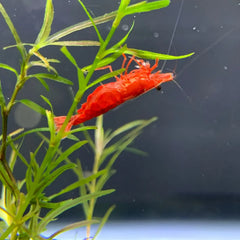
Red Line (Red Cherry, Sakura, Fire Red, Painted Fire Red): The original and most famous variety. They range from translucent pinkish-red (low-grade Cherry) to solid, opaque, deep crimson covering the entire body and legs (high-grade Painted Fire Red).
-
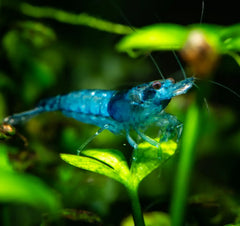
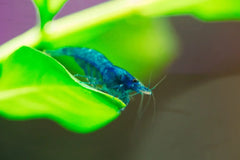
Blue Line (Blue Dream, Blue Velvet, Blue Jelly): A highly popular line. Blue Dreams feature a deep, intense midnight blue coloration, while Blue Velvets and Blue Jellies display a lighter, glass-like translucent sky blue hue.
-
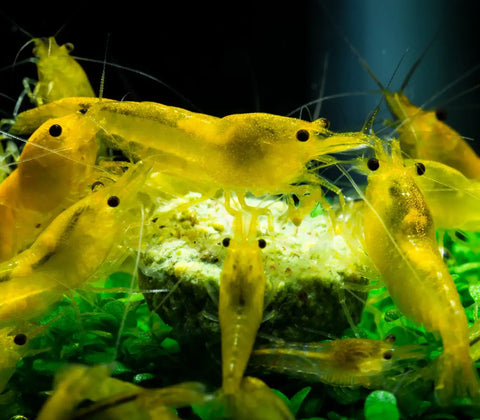
Yellow Line (Yellow Golden-Back, Neon Yellow): These shrimp showcase a bright lemon-yellow body. The "Golden-Back" variation features a distinct, highly reflective neon stripe running down the spine.
-
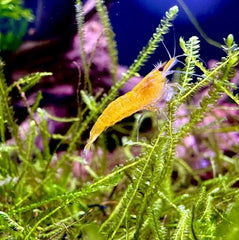
Orange Line (Orange Pumpkin, Orange Sunkist): A warm, cheerful variety sporting a solid, opaque orange tint resembling a tiny aquatic citrus fruit.
-
Green Line (Green Jade): One of the rarer color morphs, Green Jades boast a deep forest green or olive coloration that looks incredible against dark substrate.
-
Black and Chocolate Lines: Sleek, moody variations displaying solid dark brown or pure pitch-black shells.
-
Rili Shrimp: A unique patterning mutation that can occur across multiple colors (Carbon Rili, Red Rili, Blue Rili). Rili shrimp feature fully colored heads and tails, but their midsections are completely clear and translucent.
Crucial Breeding Tip: Avoid mixing different colors of Neocaridina shrimp in the same aquarium if you want to maintain their vibrant shades. When different color morphs interbreed, their offspring will eventually revert back to the wild-type coloration, resulting in clear, brown, or mottled camouflage shrimp over generations.
Setting Up the Perfect Neocaridina Aquarium
Creating a welcoming environment for dwarf shrimp involves choosing the right hardscape, filtration, and plant life.
Substrate Choices
Unlike Caridina shrimp which require active, buffering soils to lower the pH, Neocaridina shrimp thrive on inert substrates. Plain aquarium sand, fine gravel, or dark blasting sands are perfect choices. Dark substrates are highly recommended because they make the bright colors of your shrimp pop visually and help the shrimp feel secure, encouraging them to display deeper coloration.
Plants and Hardscape
Shrimp love surfaces to graze on. Incorporate plenty of live aquatic plants, driftwood, and rocks into your tank design:
-
Mosses (Java Moss, Christmas Moss): An absolute necessity for a shrimp tank. Moss traps microscopic organic particles and provides an excellent hiding space for tiny newborn shrimp (shrimplets).
-
Floating Plants (Frogbit, Salvinia): Their hanging roots pull harmful nitrates out of the water rapidly and give shrimp a unique inverted grazing playground near the surface.
-
Stem and Broad-Leaf Plants (Anubias, Crypts, Water Sprite): These provide plenty of surface area for biofilm development.
Safe Filtration: The Sponge Filter
Standard power filters or canister filters can easily suck up tiny adult shrimp and microscopic baby shrimplets. The safest choice for a shrimp tank is an air-driven sponge filter. It provides excellent biological filtration, completely eliminates the risk of suction accidents, and serves as a giant feeding ground where shrimp can graze on trapped food particles. If you must use a hang-on-back filter, always place a fine pre-filter sponge over the intake pipe.
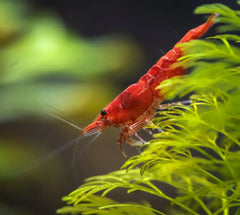
Diet and Feeding: Boosting Overall Vitality
Neocaridina shrimp spend almost every waking moment picking at rocks, plants, and substrate. They are dedicated scavengers that eat biofilm, a microscopic layer of bacteria and algae that naturally forms on every surface in an established aquarium.
In a mature, heavily planted tank, a small colony can often survive on natural biofilm alone. However, to support a growing colony, supplement their diet 2 to 3 times a week with:
-
Specialized Shrimp Foods: High-quality sinking pellets or powdered foods rich in spirulina, kelp, and protein.
-
Bacter AE: A highly popular powdered additive that safely stimulates the rapid growth of natural biofilm throughout the aquarium, ensuring newborn shrimplets have immediate access to food.
-
Blanched Vegetables: Softened slices of organic zucchini, spinach, kale, or hulled green peas. Remove any uneaten portions within 12 hours to protect your water quality.
-
Botanicals (Indian Almond Leaves / Catappa Leaves): Dropping dried catappa leaves or alder cones into the tank replicates their natural habitat. As these botanicals break down, they release beneficial tannins, lower risk of disease, and create a massive surface area for biofilm growth.
Behavior, Lifespan, and Colony Breeding
Neocaridina shrimp have a brief lifespan of roughly 1 to 2 years, but they make up for it with their incredible reproductive speed. If you keep their water clean and food abundant, they will breed automatically.
How to Tell if Shrimp are Breeding
-
The Saddle: Look closely at the upper back of a mature female shrimp. You may see a distinct, brightly colored triangular patch (usually yellow or green). This is called the "saddle," and it represents unfertilized eggs developing in her ovaries.
-
Berried Females: After a female molts, a male will fertilize her eggs. She then moves the eggs from her back down to her swimmerets (pleopods) beneath her tail. A female carrying a cluster of round eggs under her tail is called "berried." She will constantly fan the eggs with her legs for 2 to 4 weeks to keep them oxygenated and clean until they hatch into fully formed, microscopic replicas of the adults.
Selecting Compatible Tank Mates
Because adult Neocaridina shrimp are barely over an inch long and baby shrimplets are the size of a flea, almost any fish can view them as a snack.
-
The Only 100% Safe Option: Freshwater dwarf snails (like Mystery, Nerite, or Rabbit snails) and Otocinclus catfish are the only tank mates that will never eat a baby shrimp.
-
Peaceful Community Inhabitants: If you don't mind losing a few shrimplets to nature, you can house them with small nano fish like chili rasboras, neon tetras, guppies, and ember tetras, provided there is plenty of dense moss cover for the babies to hide in.
-
Strict Exclusions: Avoid keeping them with aggressive fish, large cichlids, goldfish, and large loaches.
An Essential Warning: Keep Copper Away
Like all freshwater invertebrates, Neocaridina shrimp possess copper-based blood rather than iron-based blood. Because of this, copper is a highly lethal neurotoxin to shrimp. Never use plant fertilizers, medications, or algae treatments that list copper or copper sulfate on the label, as even minute traces can instantly wipe out an entire shrimp colony.
Freshwater Aquarium Care Guides
Shop related: All Shrimp, Shrimp Pellets, All Plants, Mystery Snails, Nerite Snails, Rabbit Snails, Seachem Prime Water Conditioner, Aquarium Water Testing, Substrate, Heaters, Caves, Botanicals - Jackfruit Leaves, Spider Wood, Driftwood.
Other blogs: How often should you actually change your aquarium water, Aquarium green water: Causes and how to get rid of it, How to get rid of black beard algae.