

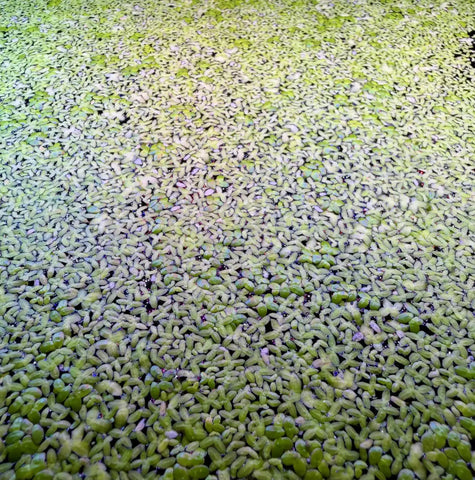
It starts with a single, innocent-looking green leaf clinging to the side of a new fish net or hitchhiking on a bundle of Java Fern. You think nothing of it. Within a few weeks, that lone leaf has multiplied into a dense, suffocating green blanket covering the entire surface of your aquarium.
Welcome to the world of duckweed (Lemna minor).
Duckweed is one of the fastest-growing, most resilient floating plants in the world. Once it takes hold, completely eradicating it can feel like an impossible task. For a comprehensive overview of how floating flora fits into your broader biological strategy, managing nutrients and keeping populations under control, check out our aquarium plants and cleanup crew guide.
Whether you are currently battling a duckweed invasion or you are trying to decide if you should purposely introduce it to your tank, this comprehensive guide will cover everything you need to know. We will weigh the pros and the cons of having duckweed, and provide a step-by-step blueprint to completely rid your aquarium of it for good.
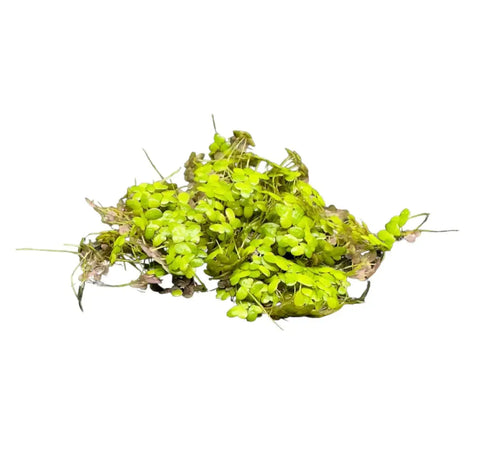
The Double-Edged Sword - The Good and the Bad of Duckweed
Before we look at how to destroy duckweed, it is important to understand why so many aquarists have a love-hate relationship with this tiny floating plant. It isn't purely an evil weed; in fact, it has some incredible benefits.
The Good: Why Some Aquarists Love Duckweed
-
Unmatched Nitrate Removal: Duckweed is a powerhouse when it comes to nutrient export. Because it grows at an exponential rate, it sucks up massive amounts of nitrates, ammonia, and phosphates from your water column. It acts as a highly efficient, natural liquid filter.
-
Algae Prevention: By rapidly absorbing nutrients and completely blocking out excessive light from reaching the lower levels of the tank, duckweed naturally starves out nuisance algae like hair algae and green spot algae.
-
Natural Cover and Stress Reduction: Many fish species, particularly Bettas, Gouramis, and shy nano fish, prefer dimmed, dappled light. The floating canopy provided by duckweed mimics their natural wild habitats, making them feel safer and reducing stress.
-
A Nutritious, Free Fish Snack: Goldfish and large snails absolutely love to eat duckweed. It is packed with protein and acts as an excellent, self-replenishing food source for herbivorous and omnivorous fish.
-
Excellent Shrimp Breeding Grounds: The dangling, microscopic roots of duckweed are perfect grazing spots for freshwater shrimp and newborn fish fry, providing both protection and access to microscopic food particles.
The Bad: Why Most Aquarists Hate Duckweed
-
Uncontrollable Exponential Growth: Under ideal conditions, a colony of duckweed can double its biomass in less than 48 hours. It quickly goes from a neat accent to an overwhelming nuisance.
-
Suffocating Light Blockage: While blocking light helps prevent algae, a dense mat of duckweed will also starve your high-light foreground and midground plants—such as dwarf hairgrass or carpeting mosses—of the light they need to photosynthesize, eventually killing them.
-
Oxygen Depletion Risks: If the surface of your aquarium is 100% covered by duckweed, it severely restricts surface agitation and gas exchange. This can lead to a drop in dissolved oxygen levels, causing your fish to gasp for air at the surface.
-
Equipment Clogging: Duckweed gets sucked into filter intakes, clogs overflow boxes, and jams internal powerheads. This can restrict your filter’s water flow and potentially burn out pump motors.
-
The Maintenance Nightmare: Every time you stick your arm in the tank to do a water change or trim a plant, you will come out with hundreds of tiny green flakes stuck to your skin. It gets everywhere, dries up into a flaky crust, and is incredibly messy to manage.
How to Get Rid of Duckweed: A Step-by-Step Eradication Blueprint
If you have decided that the cons heavily outweigh the pros, it is time to declare war. Eliminating duckweed requires consistency, persistence, and a multi-angled approach. Missing just one tiny leaf can cause the entire population to rebound within a month.
Follow this step-by-step guide to reclaim your aquarium surface.
Step 1: Turn Off All Filtration and Circulation
Before you touch the water, turn off your filters, wavemakers, and air bubblers. Surface agitation pushes duckweed underwater, traps it behind rocks, or pins it against your rim, making it impossible to collect. You want the water completely still so all the duckweed floats to the surface in a single layer.
Step 2: Mechanical Removal (The Big Scoop)
Use a fine-mesh fish net or a specialized surface skimmer tool to scoop out the vast majority of the duckweed.
-
Scoop slowly. If you move too fast, the water currents created by the net will push individual leaves downward, allowing them to escape. Dump your scooped duckweed directly into a bucket or onto a paper towel. Do not wash it down the sink, as it can clog plumbing and become an invasive species in local waterways.
Step 3: The Paper Towel Trick for the Edges
Once 95% of the duckweed is gone, you will notice stray leaves stuck to the glass, the trim of the tank, and floating in the corners. Take a dry piece of paper towel and gently lay it flat on the surface of the water near the edges. The remaining duckweed will stick to the paper towel like a magnet. Gently lift the towel out and discard it. Repeat this process around the entire perimeter of the aquarium.
Step 4: Inspect Your Hardscape and Sub-Surface Plants
Duckweed leaves often get caught in the leaves of taller plants (like Amazon Swords or Jungle Val) or trapped under floating driftwood. Gently shake your submerged plants and decorations to release any hidden hitchhikers. Wait a few minutes for them to float to the top, and use your paper towel or net to remove them.
Step 5: Clean Your Equipment
Take apart your filter intake, check the sponge pre-filters, and look inside the skimmer box. Duckweed frequently hides inside the filter housing, safely protected from your nets, only to be pumped back into the display tank once you turn the power back on. Rinse all filter components thoroughly in a bucket of tank water.
Step 6: The Daily Vigilance Phase (Crucial)
This is where most hobbyists fail. They clear the tank, see no duckweed, and assume they won't have to deal with it again. For the next 14 to 21 days, you must inspect your aquarium every single day. If you spot a single green dot, remove it immediately with a pair of tweezers or a paper towel. If you stay completely vigilant for three straight weeks without a single sighting, you have officially won the war.
Long-Term Prevention and Natural Controls
If manual removal sounds too tedious, or you want to ensure the weed never returns, you can employ biological controls and equipment modifications to keep the plant at bay.
Introduce Duckweed Predators
The easiest way to control duckweed is to let nature do the work. Certain livestock will view a duckweed explosion as an all-you-can-eat buffet.
-
Goldfish: If you have a cold-water setup, a single goldfish will obliterate a surface full of duckweed in a matter of days.
-
Large Apple Snails or Mystery Snails: While they prefer commercial food, hungry snails will happily munch away at floating vegetation.
-
Ameca Splendens (Butterfly Goodeid) or American Flagfish: These fish are legendary for their willingness to consume nuisance vegetation and hair algae, including small floating plants.
Maximize Surface Agitation
Duckweed absolutely hates turbulent, rough water. It thrives in stagnant, calm environments. By adding a powerful surface skinner, adjusting your filter output to create heavy surface agitation, or adding an aggressive air stone, you can constantly flip and submerge the duckweed. When duckweed leaves are kept underwater for extended periods, they rot and die off naturally.
Use Floating Plant Rings
If you actually enjoy having a small amount of duckweed but hate how it spreads, use a floating airline tubing ring or an acrylic plant corral. This keeps the duckweed contained to one specific, easily manageable zone of the aquarium, protecting your filters and preventing it from blocking light across the rest of your tank layout.
Freshwater Aquarium Care Guides
Shop Related: All Live Plants, Floating Plants, Duckweed, Aquarium Tools.
Other Blogs: Can aquarium plants grow in sand, How does CRI Influence Aquarium Realism, Why nerite snails are the best algae cleaner.