

If you have ever stared in awe at a professional aquascape—with its dense carpet of green grass, pearling leaves, and vibrant crimson stems—you are looking at the power of Carbon Dioxide (CO2).
For many beginners and intermediate hobbyists, pressurized CO2 feels like the final frontier. It can seem intimidating, expensive, and complex. However, mastering CO2 injection along with the core principles of our aquarium plant care guide is the single most impactful change you can make to transform your planted tank.
In this comprehensive guide, we will demystify CO2 injection. You will learn the science behind why it works, the different types of systems available, how to measure it safely, and how to balance it to avoid the ultimate hobby killer: algae.
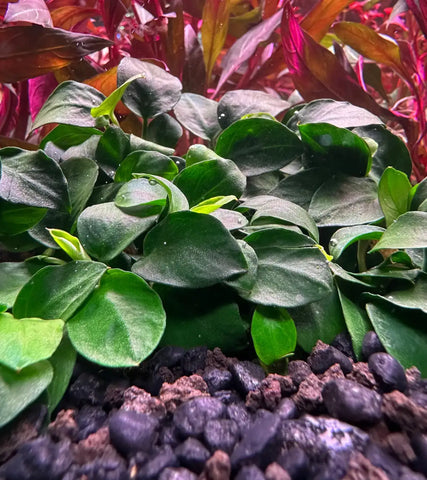
Why Do Planted Aquariums Need CO2 Injection?
In nature, wild aquatic plants have access to a massive volume of water constantly moving over them, carrying a steady supply of dissolved CO2 from decomposing organic matter and atmospheric exchange.
In a closed home aquarium, the story is completely different. The natural level of dissolved CO2 in a standard fish tank sits at a meager 1 to 3 parts per million (ppm).
When you turn on a modern, high-output LED aquarium light, you kick your plants' metabolism into overdrive. Plants require three core pillars to photosynthesize: Light, Nutrients, and Carbon. If you provide intense light and heavy liquid fertilizers, but rely on that baseline 2 ppm of natural carbon, your plants hit a metaphorical brick wall. They cannot utilize the light or nutrients without carbon. Growth stalls, leaves stunt, and opportunistic algae sweeps in to consume the excess nutrients your plants left behind.
By injecting pressurized CO2 to raise levels to a optimal 20 to 30 ppm, you complete the holy trinity of plant growth. Your plants will grow up to ten times faster, display richer colors, and easily outcompete algae for resources.
The Components of a Pressurized CO2 System
A pressurized CO2 setup is the gold standard for reliability and precise control. While it requires an upfront investment, it lasts for years. A complete system consists of several crucial components working together:
1. The CO2 Cylinder (Tank)
This is the heavy metal tank that holds the liquid CO2 under immense pressure. They typically come in 2-pound, 5-pound, or 10-pound sizes. A 5-pound cylinder can easily run a standard 29-gallon tank for six months to a year before needing a refill at a local welding supply, beverage company, or paintball shop.
2. The Regulator
The pressure inside a CO2 cylinder is incredibly high—often over 800 PSI (pounds per square inch). You cannot inject this directly into a fish tank. The regulator screws onto the cylinder and reduces that massive pressure down to a safe, workable "working pressure" (usually between 20 and 40 PSI).
Look for a regulator equipped with a solenoid valve. A solenoid allows you to plug the system into a standard wall timer so your CO2 turns on and off automatically with your lights.
3. The Needle Valve
Attached to the regulator, the needle valve allows for micro-adjustments. Turning it allows you to control the exact flow of gas leaving the regulator, dialed down to the drop.
4. The Bubble Counter
This is a small, clear cylinder filled with fluid (water or mineral oil) attached to your regulator line. As the gas flows through it, it forms distinct bubbles. This gives you a visual metric to measure your input—for example, setting your tank to "2 bubbles per second."
5. The Check Valve
This inexpensive piece of plastic or metal is a literal lifesaver. It ensures water from the aquarium cannot siphon backward down the airline tubing when the CO2 turns off, preventing catastrophic damage to your expensive regulator.
6. The Diffuser
CO2 gas entering the tank in large bubbles will simply float to the top and escape into the room. A diffuser uses a porous ceramic disc to chop the gas into a fine, misty fog of microscopic bubbles. These micro-bubbles swirl around the water column, giving the gas ample time to dissolve efficiently into the water.
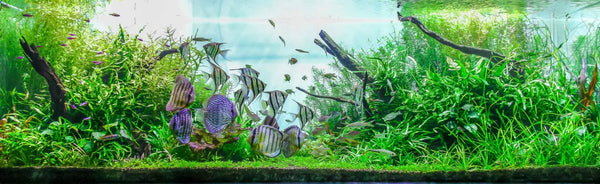
How to Safely Measure CO2 Levels
Too little CO2 causes algae; too much CO2 will suffocate your fish and shrimp. Because of this, accurate measurement is non-negotiable. There are two primary ways to monitor your levels:
The Drop Checker Method (Highly Recommended)
A drop checker is a small glass reservoir that hangs inside your aquarium. You fill it with a specialized indicator fluid (a mixture of 4dKH water and Bromothymol Blue).
As CO2 gas dissolves in your aquarium water, it interacts with the air pocket inside the drop checker, altering the pH of the indicator fluid.
-
Blue: Deficient CO2 levels (Below 15 ppm)
-
Green: Safe, Optimal CO2 levels (20–30 ppm)
-
Yellow: Dangerous CO2 levels (Above 35 ppm—turn off immediately!)
Note: Drop checkers have a 1-to-2-hour delay, so always make adjustments slowly.
The pH Drop Profile
For advanced hobbyists, measuring your pH drop is the most accurate method. Carbon dioxide creates carbonic acid when it dissolves in water, lowering your pH.
Measure your aquarium's pH right before the CO2 turns on in the morning. Then, measure it again 2 to 3 hours after the CO2 has been running. To hit the ideal 30 ppm concentration, you are looking for a full 1.0 pH drop (e.g., dropping from a baseline of 7.4 down to 6.4).
Dialing in Your Photoperiod and CO2 Timer
Plants only consume CO2 when the lights are on and photosynthesis is actively occurring. At night, plants flip their metabolism, consuming oxygen (O2) and releasing CO2 just like fish do. Injecting CO2 at night is not only a waste of gas, but it can easily suffocate your livestock.
To optimize your gas usage, coordinate your timers using this blueprint:
-
CO2 Turns On: 1 to 2 hours before your aquarium lights turn on. This ensures that the water column is already fully saturated with 30 ppm of carbon the exact second the plants wake up.
-
Lights Turn On: Run your high-intensity lights for a stable 7 to 8 hours.
-
CO2 Turns Off: 1 hour before your lights turn off. The plants will consume the remaining residual gas in the water column during that final hour, easing the tank back to its natural baseline by nightfall.
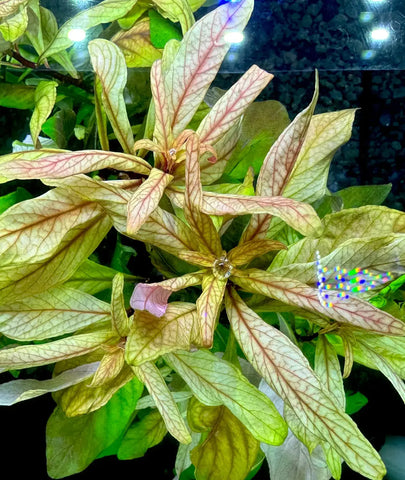
Avoiding the "Algae Trap": Balancing Light, Nutrients, and Carbon
Many hobbyists buy a CO2 system expecting it to magically vaporize all algae. If improperly managed, it can do the opposite.
Algae thrives on instability. If your CO2 levels are fluctuating wildly day to day because your timer is off, or your needle valve is inconsistent, your plants will constantly stall and reset their internal chemistry. Algae will seize on this confusion and take over the tank.
If you introduce CO2 to your aquarium, you must treat it like an ecosystem overhaul:
-
Increase Fertilization: Because your plants are growing much faster, they will deplete the water column of Nitrogen, Phosphorus, Potassium, and Iron rapidly. Ensure you switch to a comprehensive liquid fertilizer regimen.
-
Control the Light: Do not run your lights for 10+ hours. Stick to a solid 7 or 8-hour window. If you notice green dust or hair algae beginning to creep in, turn down the intensity of your light slightly rather than messing with your CO2 output.
-
Maintain Flow: Ensure your aquarium filter or a dedicated wavemaker distributes those tiny bubbles to every single corner of the tank. If you have "dead spots" with poor water circulation, those areas will suffer from localized CO2 deficiencies and sprout brush algae.
High-Tech Plant Species to Try with CO2
Once your pressurized system is dialed in and your drop checker is sitting at a steady lime green, you can successfully grow any aquatic plant in the world. Here are some incredible species that truly unlock their potential under CO2 injection:
-
Hemianthus callitrichoides 'Cuba' (Dwarf Baby Tears): This ultra-tiny foreground plant forms a dense, bright green carpet that looks like a manicured lawn. It is nearly impossible to grow flat without CO2.
-
Eleocharis acicularis 'Mini' (Mini Hairgrass): A fantastic, low-profile carpet plant that spreads rapidly via runners when fueled by carbon.
-
Rotala macrandra: A legendary stem plant that transforms into an incredible, fiery magenta-red with high light and flawless CO2 levels.
-
Pogostemon helferi: A highly unique midground plant featuring crinkled, star-shaped leaves that grows tight, bushy rosettes when provided rich carbon.
By stepping into the world of pressurized CO2, you remove the ceiling on what you can accomplish in your aquascaping journey. Maintain stability, measure carefully, and watch your underwater ecosystem thrive like never before.
Freshwater Aquarium Care Guides
Shop related: Red Plants, All plants, WeekAqua Lighting, Fertilizers, Water Test Strips.
Other blogs: How many hours of light do aquarium plants really need, Why are my plants losing leaves, Choosing the best aquarium substrate, Increasing red coloration in aquarium plants.