

Every aquascaper dreams of growing a thick, vibrant green foreground carpet. It is the hallmark of iconic layouts and lush nature aquariums. When it comes to choosing the perfect low-profile, round-leafed plant to achieve this look, two species dominate the hobby: Dwarf Baby Tears (Hemianthus callitrichoides) and Monte Carlo (Micranthemum tweediei).
At a glance, these two plants look nearly identical. Both produce dense, bright green mats of tiny, circular leaves that hug the substrate. However, under the surface, their care demands, growth habits, and structural stability are completely different.
Choosing the wrong one for your specific tank setup can mean the difference between a breathtaking underwater lawn and a melting, floating mess. This highly detailed guide breaks down the science, aesthetics, and care parameters of Dwarf Baby Tears vs. Monte Carlo so you can make the perfect choice for your next setup.
Meet the Contenders
Understanding where these plants grow naturally gives us a massive clue into how they behave in a home aquarium.
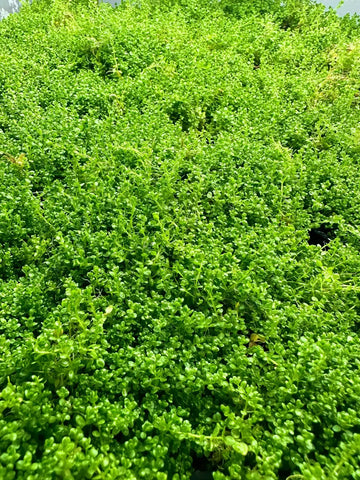
Dwarf Baby Tears
-
Scientific Name: Hemianthus callitrichoides
-
Growth Habitat: Found along river and stream edges, clinging to rocks where it gets blasted by bright sunlight and rushing, highly oxygenated water.
-
Leaf Size: 1 to 2 millimeters (the smallest true carpeting plant in the hobby).
Monte Carlo

-
Scientific Name: Micranthemum tweediei
-
Growth Habitat: Found along riverbanks and in shallow waters, frequently transitioning between fully submerged and emersed states.
-
Leaf Size: 3 to 4 millimeters (roughly double the size of Dwarf Baby Tears).
1. Visual Comparison: Textures and Scale
While both plants create a stunning green carpet, the visual impact they have on your aquarium layout differs based on the size of your tank.
Dwarf Baby Tears: The Delicate, Nano-Scale Classic
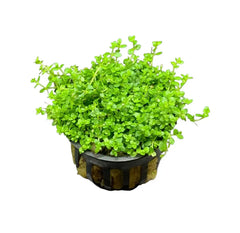
Because its leaves are microscopic, Dwarf Baby Tears creates a carpet with an incredibly fine texture. This unique scale creates a massive sense of depth and forced perspective. In small nano tanks, it makes the environment look vast and majestic.
Furthermore, this species is legendary for pearling—trapping oxygen bubbles beneath its leaves under high light, making the entire carpet look like it is dusted in diamonds.
Monte Carlo: The Lush, Heavy Blanket
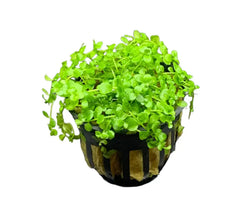
Monte Carlo leaves are slightly larger and thicker, giving the carpet a more voluminous, robust appearance. While it still looks fantastic in nano tanks, it excels in medium to large aquariums where a delicate texture might get visually lost.
One unique aesthetic superpower of Monte Carlo is its weeping habit. While Dwarf Baby Tears prefers to grow strictly flat over soil, Monte Carlo will aggressively cascade down vertical rock walls and driftwood, mimicking hanging vines.
2. Growth Parameters and Difficulty: High-Tech vs. Low-Tech
This is the most critical point of divergence. One of these plants is an unforgiving diva; the other is remarkably easygoing.
Dwarf Baby Tears: The Advanced Masterclass
This is universally recognized as one of the most difficult foreground plants to sustain. To keep it from melting into yellow goo, you must provide a strict ecosystem:
-
Lighting: Extreme intensity. It requires high PAR at the substrate level. If the light is too weak, the stems will stretch vertically toward the light rather than creeping horizontally.
-
CO2 Injection: Mandatory. It demands a high, perfectly stable concentration of pressurized carbon dioxide (30 ppm). Without regular gas injection, photosynthesis stalls and the plant degrades.
-
Temperature Sensitivity: It thrives in cooler water. If your tank exceeds 78°F, it struggles significantly and becomes highly prone to rotting unless your carbon dioxide and nutrient levels are absolutely flawless.
Monte Carlo: The Beginner-Friendly Alternative
Monte Carlo shot to fame in the aquarium world because it delivers the beautiful look of Dwarf Baby Tears without the stressful maintenance checklist.
-
Lighting: Highly adaptable. While it spreads fastest under high light, it carpets beautifully under medium or even moderate lighting.
-
CO2 Injection: Recommended but not strictly required. You can successfully grow a Monte Carlo carpet in a low-tech tank without pressurized gas. It will simply grow at a much slower, more manageable pace.
-
Forgiving Chemistry: It tolerates a wider temperature range (68°F to 82°F) and isn't easily triggered to melt by minor nutrient or gas fluctuations.
3. Root Systems and the Dreaded "Floating Carpet" Disaster
There is nothing more frustrating than waking up to find half of your beautiful green carpet has detached from the soil and is floating at the top of your tank. This is a common issue determined directly by root structures.
The Shallow Root Risk
Dwarf Baby Tears has an incredibly shallow, thread-like root system. Because its roots barely penetrate the top few millimeters of soil, it relies on intense, frequent trimming to keep it thin.
If the carpet grows thicker than an inch, the lower layers of the plant will be starved of light and die. Once the bottom layer rots, the healthy top layer loses its anchor and the entire carpet floats to the surface like a piece of sod. It is also easily uprooted by bottom-dwelling fish or large snails.
The Thick Root Anchor System
Monte Carlo develops a deep, thick, and highly aggressive root matrix. It anchors itself firmly into aqua soil, sand, or gravel. This deep root system makes it much more resilient against burrowing livestock and allows the carpet to grow slightly thicker before requiring a trim. It can even extract nutrients from deep within old substrate beds.
Which Plant Should You Choose?
To make your decision easy, match your current tank hardware and experience level to the criteria below.
Choose Dwarf Baby Tears if:
-
You have an advanced setup with a high-end light and a pressurized carbon dioxide system.
-
You are aquascaping a small nano tank and want a hyper-delicate, fine-textured carpet to maximize the sense of scale.
-
You live in a cool environment or have a system where water stays consistently below 77°F.
-
You enjoy regular tank maintenance, pruning, and precise fertilizer dosing.
Choose Monte Carlo if:
-
You are running a low-tech or medium-tech tank without pressurized carbon dioxide.
-
This is your first time attempting a carpeting foreground plant.
-
You want a plant that can drape, cascade, and grow over hardscape rocks rather than just growing flat on the soil.
-
You have bottom-dwelling fish (like loaches or catfish) that might uproot delicate flora.
-
You prefer a fast-growing, low-maintenance carpet that requires less frequent trimming.
Pro Tip: Achieve Success with the "Dry Start Method"
Whether you pick Dwarf Baby Tears or Monte Carlo, planting them can be tedious because the individual stems are so small. To completely bypass the frustration of plants floating up during initial planting, use the dry start method.
Set up your substrate, place your hardscape, and plant small sections of the carpet using tweezers into damp soil. Instead of filling the tank with water, seal the top of the aquarium tightly with plastic wrap to trap 100% humidity. Run your lights for 10 to 12 hours a day.
Allowing the plants to grow out of water for 3 to 4 weeks gives them access to unlimited carbon dioxide from the surrounding air. They will establish a massive, deep root network and partially carpet the tank. Once the roots are completely locked into the soil, you can safely fill the aquarium with water, turn on your filtration, and enjoy an instant, un-uprootible foreground layout!
Freshwater Aquarium Care Guides
Shop related: Aquatic Plants, Aquatic Plant Fertilizers, Aquarium Water Test Kit.
Other blogs: Why are my aquarium plants dying? Top 5 mistakes, Do red aquarium plants really need co2 and strong lighting, How many hours of light do aquarium plants need.