

Few sights in the aquascaping hobby are as breathtaking as a lush, vibrant canopy of red aquarium plants. Species like Rotala rotundifolia 'H'ra', Ludwigia palustris 'Super Red', and Alternanthera reineckii can transform an ordinary aquascape into an extraordinary underwater masterpiece.
However, many hobbyists bring these stunning fiery plants home only to watch them slowly fade into a dull, muddy green.
Achieving that deep, intense crimson isn’t a matter of luck—it is a science. While establishing proper lighting and dosing routines from a comprehensive beginner planted tank guide gets you started on the right foot, bringing out these brilliant hues requires a few targeted tweaks In this comprehensive guide, we will break down the exact biological triggers behind red plant coloration and provide you with an actionable blueprint to maximize the red in your tank.
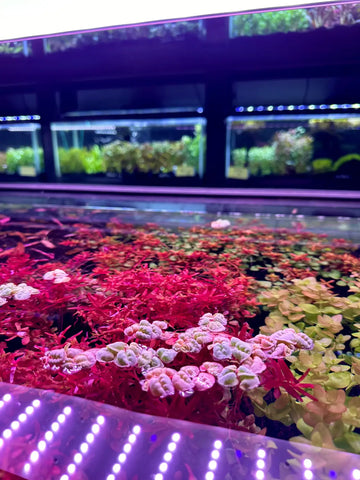
The Biology Behind the Color: What Makes Plants Turn Red?
Before changing your tank parameters, it helps to understand why aquarium plants turn red.
In nature, green coloration comes from chlorophyll, the primary pigment plants use to absorb light for photosynthesis. Red coloration, on the other hand, comes from a group of pigments called anthocyanins.
Anthocyanins act as a natural sunscreen for the plant. When a plant is exposed to intense light or specific environmental stressors, it produces these red pigments to shield its delicate tissues from damage. Therefore, our goal as aquascapers is to safely stimulate the production of anthocyanins without compromising the overall health of the plant.
1. High-Intensity Lighting: The Ultimate Catalyst
If your lighting is inadequate, your plants will never turn red. Because red pigments require significant energy to produce, and because they actively block some light from reaching the chlorophyll, a plant will only invest in turning red if it has light to spare.
PAR and Spectrum Matter
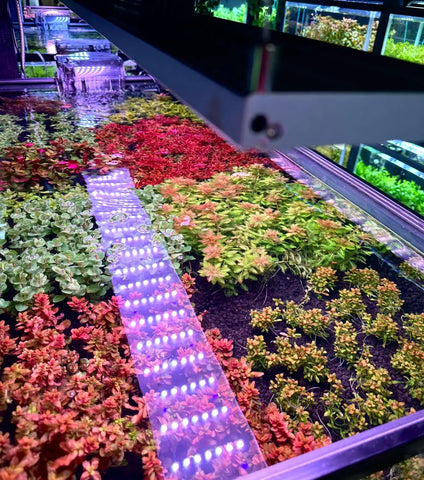
To grow deep red plants, you need a high-output LED light fixture capable of delivering high PAR (Photosynthetically Active Radiation) at the substrate level. Aim for a PAR rating of at least 80 to 100+ µmol/m²/s at the depth where your plants are growing.
Furthermore, look for a light with a dedicated RGB (Red, Green, Blue) or WRGB spectrum. Plants utilize red and blue wavelengths of light most efficiently for photosynthesis. A light fixture with strong red and blue diodes will not only stimulate anthocyanin production but will also visually enhance the red colors already present in the tank, making them pop to the human eye.
Photoperiod Consistency
Keep your lights on a strict timer. A photoperiod of 7 to 8 hours of high-intensity light is generally the sweet spot. Avoid running your lights for 10 to 12 hours to compensate for low intensity; this will only trigger a massive algae outbreak rather than shifting your plants' colors.
2. Pressurized CO2 Injection: The Engine of Growth
High light is a powerful engine, but if you step on the gas without fuel, the car crashes. In a high-light aquarium, carbon dioxide (CO2) is the vital fuel your plants need to keep up with their accelerated metabolism.
Without pressurized CO2, high-intensity lighting will quickly lead to stunting, melting, and severe issues with hair and brush algae. Injecting CO2 allows the plant to photosynthesize at maximum efficiency. This give the plant the excess energy reserves required to manufacture those beautiful red anthocyanin pigments.
Aim for a stable CO2 concentration of 30 parts per million (ppm). Use a drop checker with a 4dKH reference solution to monitor your levels, ensuring it sits at a crisp lime-green color during the hours the lights are on. Consistency is key; fluctuations in CO2 cause stress that leads to algae rather than color.
3. Nitrate Limitation: The Secret Weapon for Specific Species
This is the advanced technique that separates master aquascapers from hobbyists. For certain highly popular red plants—such as Rotala species (like 'H'ra' and 'Colorata') and Hygrophila pinnatifida—nitrate limitation is the secret to unlocking jaw-dropping reds.
When a plant experiences a controlled shortage of nitrogen (nitrates), its growth slows down, and its chlorophyll levels drop. As the green chlorophyll fades, the underlying red anthocyanin pigments become brilliantly dominant.
How to Safely Limit Nitrates
To achieve this, aquascapers keep the water column lean on nitrogen, aiming for nitrate (NO3) levels between 1 ppm and 5 ppm.
However, you must be careful. If you starve the plant completely, it will die. To practice safe nitrate limitation, use a rich, nutrient-dense aqua soil at the root zone. This allows the plants to feed on nitrogen through their roots while keeping the water column stripped of nitrates, forcing the upper canopy of the stems to turn a brilliant, fiery red.
Note: This trick does not apply to all red plants. Species like Alternanthera reineckii and Ludwigia inclinata prefer heavy water-column fertilization and will stunt if nitrates drop too low.
4. Heavy Iron Fertilization: Fact vs. Fiction
For decades, the golden rule of the hobby was simple: "If you want red plants, add more iron." While iron (Fe) is absolutely essential, the reality is a bit more nuanced.
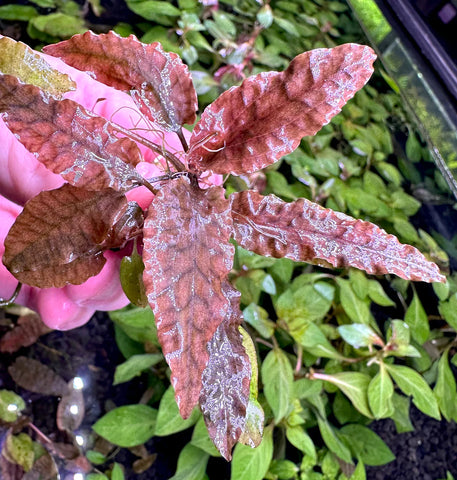
Iron does not directly cause a plant to turn red. Instead, iron is a critical catalyst in the production of chlorophyll and overall plant metabolism. If a plant is deficient in iron, it becomes chlorotic (pale and yellow) and cannot produce pigments of any color.
To ensure your red plants have everything they need, dose a high-quality chelated iron supplement regularly. Ensure your micronutrient fertilizer provides a steady supply of iron so the plants never hit a bottleneck. Think of iron as the foundation: it won’t make a green plant magically turn red on its own, but a red plant cannot sustain its color without it.
5. Substrate Selection and Root Feeding
Red plants are notoriously heavy root feeders. While water column dosing is beneficial, providing a rich substrate is the best way to ensure long-term success.
Always choose a high-quality, clay-based active aqua soil rather than inert sand or gravel. Active soils have a high Cation Exchange Capacity (CEC), meaning they hold onto nutrients and deliver them directly to the plant roots.
If your substrate is more than a year old and starting to lose its nutrients, or if you are using an inert substrate, you must supplement it. Insert premium root tabs directly beneath your red plants every 2 to 3 months to keep their root systems fueled and healthy.
Top Red Aquarium Plants for Beginners and Experts
If you are ready to experiment with these techniques, here are some fantastic red species to add to your next custom plant bundle, categorized by difficulty:
Easy to Moderate Red Plants
-
Ludwigia palustris 'Super Red': One of the easiest plants to keep red. It does not require nitrate limitation and stays deep crimson even under moderate light and low CO2.
-
Echinodorus 'Ozelot' or 'Red Flame' (Sword Plants): Beautiful, massive centerpiece plants that develop gorgeous red and purple mottled leaves when fed heavily with root tabs.
-
Cryptocoryne wendtii 'Brown' or 'Red': Excellent low-light options that offer earthy, deep bronze and reddish tones without needing high-tech equipment.
Advanced High-Tech Red Plants
-
Rotala rotundifolia 'H'ra': Requires intense light, CO2, and strict nitrate limitation to shift from an orange-green to a breathtaking, vibrant pinkish-red.
-
Alternanthera reineckii 'Mini': A stunning foreground/midground bush that requires high light, heavy iron, and rich CO2 to maintain its rich, wine-red underside.
-
Ludwigia inclinata var. verticillata 'Pantanal': The ultimate challenge. This plant requires extremely soft water, massive amounts of CO2, and high fertilization to show off its intense pink and red crown.
Summary Checklist for Maximum Red Coloration
To get the most out of your colorful aquascape, ensure you are ticking all of these boxes:
-
Upgrade to a high-PAR, WRGB LED light fixture.
-
Inject pressurized CO2 at a stable 30 ppm.
-
Use a nutrient-dense aqua soil and supplement with root tabs.
-
Keep your photoperiod steady at 7 to 8 hours daily.
-
Maintain consistent micro-fertilization with a focus on chelated iron.
-
For specific stem plants like Rotala, experiment with keeping water column nitrates low (1-5 ppm) while keeping the root zone rich.
By balancing intense lighting with flawless CO2 and targeted nutrition, you will unlock the full genetic potential of your flora, transforming your aquarium into a dynamic, living piece of art.
Freshwater Aquarium Care Guides
Shop related: Red Plants, All plants, WeekAqua Lighting, Fertilizers, Water Test Strips.
Other blogs: How many hours of light do aquarium plants really need, Why are my plants losing leaves, Choosing the best aquarium substrate.