

Few things are more frustrating in the aquascaping hobby than watching a beautifully designed planted tank begin to fall apart. You invest your time, money, and energy into sourcing premium live plants, only to wake up a few weeks later and find a carpet of detached, floating leaves clogging your filter intake.
Watching your aquatic plants lose their leaves can feel incredibly discouraging, but it is important to understand that leaf drop is rarely a random event. It is a highly visible, urgent distress signal. Your plants are letting you know that they are struggling to adapt to an imbalance in their environment. Fortunately, leaning on a reliable aquarium plant care guide can help you quickly decode these signals and restore equilibrium to your ecosystem.
In this comprehensive troubleshooting guide, we are breaking down the top five biological reasons why aquarium plants shed their leaves and giving you an actionable game plan to fix it.
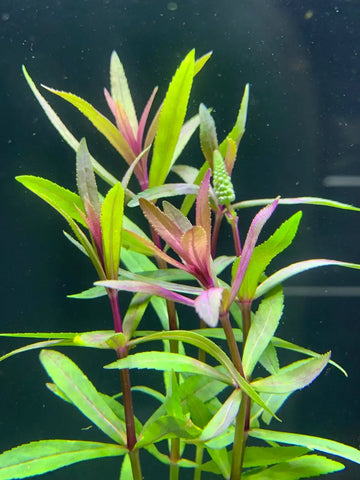
1. The "Crypt Melt" Phenomenon (Emersed to Submersed Transition)
If you recently added brand-new plants to your aquarium within the last 1 to 3 weeks, leaf loss is actually completely normal. This process is commonly referred to by hobbyists as "aquarium plant melt."
The Science Behind the Melt
The vast majority of commercial nurseries grow aquatic plants emersed (with their roots in mud or water, but their leaves completely exposed to the open air). Farms do this because plants grow exponentially faster in the air, have access to endless atmospheric CO2, and don't suffer from algae.
When you purchase these plants and submerge them entirely underwater in your home aquarium, their open-air leaves can no longer breathe properly. The plant recognizes that its current leaves are useless in an underwater environment. To survive, the plant systematically cuts off nutrients to its old foliage, causing the leaves to melt away, so it can redirect all its energy into growing brand-new, highly specialized submersed leaves.
-
Most Common Victims: Cryptocoryne species (famous for "Crypt Melt"), Bucephalandra, Anubias, and many stem plants like Hygrophila.
-
The Fix: Do not panic and do not throw the plant away. As long as the horizontal stem (rhizome) or the root base feels firm and solid, the plant is alive. Use aquascaping tweezers to gently remove the decaying leaves from the tank so they don't foul your water, and wait. Within a couple of weeks, you will see bright, healthy, underwater-adapted leaves sprouting from the center.
2. Nutrient Deficiencies (Mobile vs. Immobile Elements)
If your plants have been established in your aquarium for months and suddenly start dropping leaves, you are likely dealing with a severe nutrient deficiency.
Aquarium plants require a balanced diet of macro-nutrients (Nitrogen, Phosphorus, Potassium) and micro-nutrients (Iron, Magnesium, Trace elements). When a specific element is missing, plants behave in very predictable ways depending on the type of nutrient they lack:
Mobile Nutrient Deficiencies (Lower Leaf Drop)
Mobile nutrients are elements that a plant can freely move around its internal tissue. If the water column is starved of Nitrogen (N) or Potassium (K), the plant will prioritize its newest, highest leaves closest to the light. It will literally strip the nutrients out of its own older, lower leaves to feed the top growth.
-
The Symptom: Lower leaves turn pale yellow, develop pinholes, rot, and fall off, while the very top of the plant looks perfectly green.
-
The Fix: Increase your dosing of an all-in-one liquid fertilizer or insert fresh root tabs directly beneath your heavy root-feeding plants.
Immobile Nutrient Deficiencies (New Growth Failure)
Immobile nutrients, like Iron (Fe) or Calcium (Ca), cannot be relocated once they are used to build a leaf.
-
The Symptom: The new leaves at the very top of the plant emerge twisted, stunted, white, or completely pale, eventually disintegrating and snapping off.
-
The Fix: Supplement your aquarium with a dedicated iron or trace element booster.
3. Light Starvation (The Lower Stem Problem)
Light is the primary engine of photosynthesis. If your aquarium lighting is too weak, or if your plants are packed together too densely, the lower portions of your aquascape will quickly starve for light.
This is exceptionally common with fast-growing stem plants. As the tops of the stems grow taller and bushier, they create a thick canopy that blocks light from reaching the bottom of the tank.
-
The Symptom: The top 3 inches of your stem plants look lush, vibrant, and healthy, but the bottom 6 inches of the stems become completely bare, brittle, yellow, and lose every single leaf.
-
The Fix: You need to perform regular trimming. Use sharp aquascaping scissors to cut back the dense top canopy to let light penetrate down to the substrate. Alternatively, it might be time to upgrade to a high-output, full-spectrum programmable LED light fixture that offers better depth penetration.
4. Suffocated Rhizomes (Anubias & Bucephalandra Mistakes)
As we discussed in our guide on how plants eat, certain species are classified as epiphytes. These plants feature a thick, horizontal creeping stem called a rhizome, from which both leaves and anchor roots grow.
A very common beginner mistake is planting epiphyte species deep into aquasoil, sand, or gravel just like a traditional rooted plant.
-
The Symptom: When a rhizome is buried under substrate, it gets cut off from fresh oxygen and water circulation. Anaerobic bacteria quickly attack the trapped tissue, causing the rhizome to turn soft and mushy. As the stem rots, the leaves cleanly detach one by one and float to the surface.
-
The Fix: Pull the plant completely out of the substrate immediately. Trim away any mushy parts of the stem. Use aquarium safe glue to secure the remaining firm, healthy portion of the rhizome directly onto an exposed piece of driftwood, lava rock, or hardscape crevice.
5. Poor Water Circulation (Stagnant Nutrient Zones)
You can add the best fertilizers and CO2 systems in the world to your aquarium, but if your water isn't moving efficiently, your plants will still starve and shed leaves.
Aquarium plants form a microscopic, stagnant boundary layer of water around their leaves. They rely on constant water movement to brush this layer away, delivering fresh nutrients and dissolved gases directly to the leaf surface. If a tight corner of your tank or a dense bush of plants has zero water flow, a localized nutrient dead zone forms.
-
The Symptom: Leaf drop occurs exclusively in specific, crowded corners of the aquarium or deep within dense plant thickets where the leaves don't sway.
-
The Fix: Thin out dense growth during your weekly maintenance to allow water to pass through. Check your filter's flow rate, clean your sponge pre-filters, or strategically add a small wavemaker or circulation pump to eliminate dead spots in your tank layout.
Summary Checklist: How to Save Your Leaves
To stop your plants from dropping leaves, run through this quick evaluation checklist:
-
Is the plant less than a month old? Expect some transition melting. Keep your water clean and wait for submersed leaves.
-
Are only the lowest leaves dropping? Add root tabs or increase your liquid fertilizer dosing to combat a mobile nutrient deficiency.
-
Are the stems bare at the bottom? Trim the top canopy to let light penetrate deep into the tank.
-
Are your Anubias or Buce buried? Pull them out of the dirt immediately and attach them to rocks or wood.
Need to revive your aquascape? We specialize in sourcing live plants, nutrient-rich root tabs, and professional-grade smart LED lighting designed to help your aquarium thrive.
Freshwater Aquarium Care Guides
Shop related: Aquatic Plants, Aquarium Plant Nutrients, LED Lighting.
Other blogs: Why are my aquarium plants growing roots from the stem, The ultimate guide to co2 in planted aquariums, How to increase red coloration in aquatic plants.