

If you’ve ever added a beautiful Cryptocoryne plant to your aquarium only to watch the leaves suddenly turn transparent, mushy, or completely disappear, you’ve experienced one of the most common planted tank phenomena: crypt melt.
For many aquarium hobbyists, crypt melt can be alarming. One day your plant looks healthy and vibrant, and the next it appears to be dying right before your eyes. Fortunately, crypt melt is usually not a sign that your plant is dead. In most cases, it’s a temporary adjustment process that Cryptocoryne species go through when adapting to new aquarium conditions. If you are new to keeping live greenery, setting up a stable environment using a comprehensive aquarium plant care guide can go a long way in minimizing this kind of shock.
In this complete guide, we’ll cover everything you need to know about crypt melt, including what causes it, how to prevent it, how to treat it, and how to help your crypt plants recover stronger than ever.
What Is Crypt Melt?
Crypt melt refers to the rapid deterioration of leaves in Cryptocoryne aquarium plants after a change in environment or water conditions. The leaves often become soft, transparent, brown, or mushy before completely breaking down.
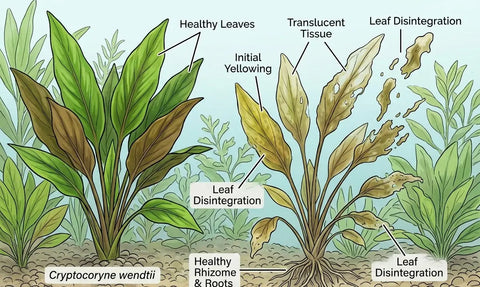
This phenomenon is extremely common in planted aquariums and affects nearly all species of Cryptocoryne at some point.
Despite how dramatic it looks, crypt melt is usually a natural survival response rather than a true plant death.
The plant’s root system often remains healthy beneath the substrate, and new leaves typically regrow once the plant adapts to its new environment.
What Are Cryptocoryne Plants?
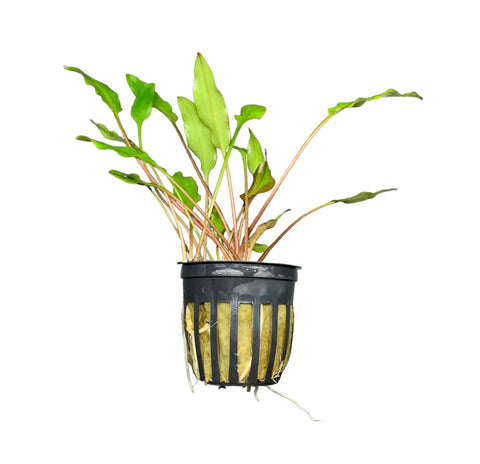
Cryptocoryne, often shortened to “crypts,” are popular freshwater aquarium plants native to Southeast Asia. They are loved for their:
- Hardiness
- Beautiful leaf shapes
- Variety of colors
- Low maintenance requirements
- Ability to thrive in low-tech aquariums
Popular species include:
- Cryptocoryne wendtii green
- Cryptocoryne lutea
- Cryptocoryne lucens
- Cryptocoryne parva
- Cryptocoryne balansae
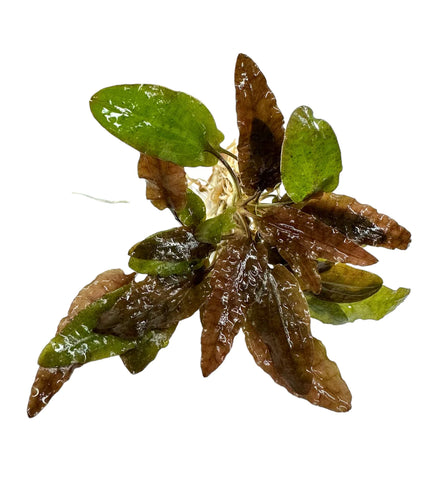
- Cryptocoryne wendtii bronze
Crypts are considered root feeders and generally prefer stable aquarium conditions.
Why Does Crypt Melt Happen?
Crypt melt occurs because Cryptocoryne plants are highly sensitive to environmental changes. When conditions suddenly shift, the plant may abandon its current leaves and grow new ones better suited to the new environment.
Think of it as a “reset” mechanism.
The existing leaves were grown under one set of conditions, and the plant decides they are no longer efficient for survival in the new setup.
The Most Common Causes of Crypt Melt
1. Transplant Shock
The most common cause of crypt melt is moving the plant from one environment to another.
For example:
- Moving from a greenhouse to an aquarium
- Moving between tanks
- Replanting in new substrate
- Shipping stress during transit
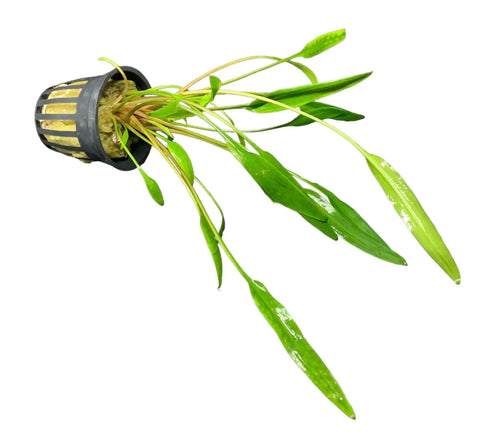
Many aquarium plants are grown emersed (above water) at commercial farms. Once submerged in your aquarium, the plant must transition to underwater growth.
During this transition, the old leaves often melt away while submerged-adapted leaves develop.
2. Sudden Water Parameter Changes
Crypts dislike instability. Rapid changes in water chemistry can trigger melting.
Key parameter changes include:
- pH swings
- Temperature fluctuations
- KH/GH changes
- TDS shifts
- Drastic water changes
Even healthy, established crypts may melt if the aquarium environment changes too quickly.
3. Lighting Changes
Cryptocoryne plants adapt closely to lighting intensity.
A sudden move from low light to high light — or vice versa — can stress the plant enough to cause melting.
Common examples include:
- Upgrading aquarium lights
- Increasing photoperiod dramatically
- Moving the plant to a brighter area of the tank
4. Nutrient Deficiencies
While nutrient deficiencies alone may not always cause full crypt melt, they can weaken the plant and make it more susceptible.
Crypts are heavy root feeders and especially benefit from:
Nutrient-poor substrate often leads to struggling crypts.
5. CO2 Fluctuations
In high-tech planted aquariums, inconsistent CO2 injection can stress crypts significantly.
Sudden increases or decreases in CO2 availability can trigger melting, especially in sensitive species.
Consistency is far more important than chasing high CO2 levels.
6. Aggressive Tank Maintenance
Large substrate disturbances can damage crypt root systems and trigger melt.
Examples include:
- Deep gravel vacuuming near roots
- Pulling nearby plants
- Rearranging hardscape
- Excessive trimming
Crypts prefer stability and often resent being disturbed.
What Does Crypt Melt Look Like?
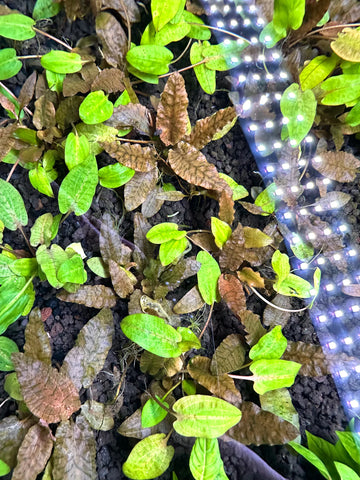
Crypt melt has several recognizable symptoms.
Common Signs Include:
- Leaves turning translucent
- Brown or yellow discoloration
- Mushy or slimy leaves
- Sudden collapse of foliage
- Leaves dissolving rapidly
- Entire plant appearing dead above substrate
In severe cases, all visible leaves may disappear entirely.
However, the roots and crown are often still alive.
Is Crypt Melt Dangerous to Your Aquarium?
Usually, crypt melt is harmless if managed properly.
However, decomposing leaves can release ammonia and contribute to poor water quality in smaller aquariums.
This is especially important in:
- Nano tanks
- Newly cycled aquariums
- Heavily stocked aquariums
Removing melting leaves promptly helps maintain water quality.
How to Fix Crypt Melt
The good news is that crypt melt is often temporary and recoverable.
Step 1: Don’t Panic
Many hobbyists mistakenly throw away crypt plants too early.
If the roots and crown remain healthy, the plant will often recover completely.
Patience is critical.
Step 2: Remove Dead Leaves
Trim away melting leaves using clean aquascaping scissors.
This helps:
- Prevent decay buildup
- Improve water quality
- Encourage new growth
- Reduce algae risk
Avoid pulling on the crown or roots.
Step 3: Leave the Roots Undisturbed
Even if all leaves disappear, leave the root system in place.
Crypts frequently regrow from seemingly dead root structures within a few weeks.
Constantly uprooting the plant only increases stress.
Step 4: Maintain Stable Conditions
Stability is the key to recovery.
Focus on:
- Consistent temperature
- Stable lighting schedule
- Gentle maintenance
- Consistent fertilization
- Stable CO2 levels
Avoid major changes during recovery.
Step 5: Add Root Tabs
Since crypts are heavy root feeders, root tabs can significantly improve recovery speed.
A nutrient-rich substrate or supplemental root fertilization provides essential nutrients directly to the roots.
Root tabs containing iron and potassium are especially helpful.
How Long Does Crypt Melt Last?
Recovery times vary depending on species and tank conditions.
Typical recovery timeline:
- Mild melt: 1–2 weeks
- Moderate melt: 2–6 weeks
- Severe melt: 1–3 months
Some slow-growing crypt species take longer to rebound.
Patience is one of the most important skills in planted aquarium keeping.
Can You Prevent Crypt Melt?
You can’t always prevent crypt melt entirely, but you can reduce its severity significantly.
Best Practices to Prevent Crypt Melt
Acclimate New Plants Slowly
When introducing new crypts:
- Float plants to equalize temperature
- Avoid sudden parameter shifts
- Plant gently
- Avoid excessive handling
Gradual adaptation helps reduce stress.
Keep Water Parameters Stable
Consistency matters more than perfection.
Avoid:
- Massive water changes
- Sudden temperature swings
- Rapid pH adjustments
- Unstable CO2 injection
Stable aquariums almost always produce healthier crypts.
Use Nutrient-Rich Substrate
Crypts thrive in substrates designed for planted tanks.
Good substrate options include:
- Aquasoils
- Nutrient-rich planted substrates
- Gravel supplemented with root tabs
Healthy roots lead to healthier plants.
Avoid Constant Rearranging
Cryptocoryne plants dislike being moved repeatedly.
Once planted:
- Leave them in place
- Avoid disturbing roots
- Plan your aquascape carefully
Mature crypts often become more resilient over time.
Do All Crypt Species Melt?
Some species are more sensitive than others.
More Sensitive Species
- Cryptocoryne balansae
- Cryptocoryne spiralis
- Cryptocoryne nurii
More Resilient Species
- Cryptocoryne wendtii
- Cryptocoryne lutea
- Cryptocoryne beckettii
Even hardy species can melt under stressful conditions.
Can Crypt Melt Spread to Other Plants?
No, crypt melt is not contagious.
It is a stress response unique to the affected plant.
However, poor aquarium conditions causing crypt melt may also stress other plants.
If multiple plant species are struggling, investigate:
- Nutrient deficiencies
- CO2 instability
- Poor lighting balance
- Water chemistry issues
Should You Remove a Completely Melted Crypt?
Not immediately.
As long as:
- The crown is firm
- Roots remain healthy
- There is no foul smell
…the plant still has a strong chance of recovery.
Many hobbyists are surprised when new shoots suddenly emerge weeks after complete leaf loss.
Why Experienced Aquascapers Don’t Fear Crypt Melt
Veteran planted tank hobbyists understand that crypt melt is often part of the normal adaptation process.
In fact, many experienced aquascapers expect some melting when introducing new crypts.
Once established, crypts can become some of the most durable and rewarding aquarium plants available.
Mature crypts often develop:
- Larger leaves
- Richer coloration
- Stronger root systems
- Improved resistance to stress
The Hidden Benefit of Crypt Melt
Oddly enough, crypt melt can actually lead to healthier long-term growth.
When the plant regrows submerged-adapted leaves, the new foliage is often:
- Better suited for aquarium life
- More colorful
- Stronger
- More stable
This is especially true for plants transitioning from emersed farm growth.
Frequently Asked Questions About Crypt Melt
Will My Crypt Plant Come Back?
In most cases, yes.
If the roots and crown are healthy, new growth usually returns after the adjustment period.
Should I Increase Fertilizer During Crypt Melt?
Moderate fertilization can help, especially root tabs.
However, avoid dramatically overdosing fertilizers during recovery.
Stability is more important than excess nutrients.
Can Fish Cause Crypt Melt?
Certain fish may damage leaves, but true crypt melt is generally caused by environmental stress rather than livestock.
Digging fish can disturb roots and indirectly trigger melting.
Is Crypt Melt a Sign of Poor Tank Health?
Not necessarily.
Even healthy, stable aquariums may experience crypt melt when introducing new plants.
Persistent melting in established plants, however, may indicate instability or nutrient issues.
Final Thoughts on Crypt Melt
Crypt melt is one of the most misunderstood aspects of keeping Cryptocoryne aquarium plants. While it can look catastrophic, it is usually a temporary adaptation response rather than permanent plant death.
The key to success is patience, stability, and proper plant care.
Most crypts recover beautifully once they adapt to their environment, often becoming some of the hardiest and most attractive plants in the aquarium.
If you’re new to planted tanks, don’t let crypt melt discourage you. Nearly every experienced aquascaper has dealt with it, and successful recovery is extremely common.
With proper care, your crypts can thrive for years and become a stunning centerpiece in your planted aquarium.
Freshwater Aquarium Care Guides
Shop related: All Crypt Plants, Aquascaping tools, Seachem Prime Water Conditioner, Root Tabs, Fertilizers.
Other blogs: Why are my aquarium plants growing roots from the side, Top 5 aquarium plant deficiencies in a freshwater tank, The ultimate guide to co2 in planted aquariums.