

When it comes to biological algae control, few aquatic creatures can match the efficiency of nerite snails. They are the undisputed champions of keeping glass sparkling, hardscape clean, and aquatic plants free of film. However, as the aquascaping hobby expands, more specialized species are making their way into local fish stores.
Most hobbyists are familiar with the classic nerite snails belonging to the Neritina genus. But a closely related group, the Neritodryas genus, is quickly gaining popularity. While both are technically "nerite snails" belonging to the family Neritidae, they possess distinct differences in behavior, anatomy, and how they function inside an aquarium.
Understanding the unique characteristics of Neritina sp. versus Neritodryas sp. is essential for choosing the right invertebrate workforce for your tank.
Taxonomical Roots: Same Family, Different Lineage
To understand how these snails differ, it helps to look at where they come from. Both belong to the Neritidae family, a ancient group of snails known for their thick, heavy shells, tightly fitting operculums (the "trapdoor" that seals the shell), and inability to reproduce successfully in pure freshwater.
-
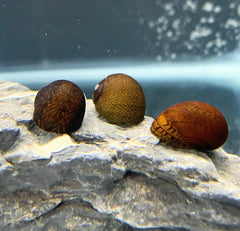
Neritina sp. represents the baseline of the aquarium snail hobby. This genus includes staples like the Zebra Nerite, Tiger Nerite, Yellow Racer Nerite, and Olive Nerite. They are primarily aquatic, adapted to moving across smooth underwater surfaces like river rocks and driftwood.
-
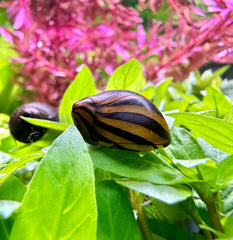
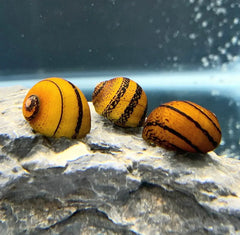
Neritodryas sp. represents a more specialized branch of the family tree. This genus includes unique varieties like the Lightning Bolt Snail and the O-Ring Snail (Neritodryas javanica). Structurally, they are built differently, possessing slightly lighter, more spherical, or globally contoured shells designed for a distinct lifestyle.
Structural and Aesthetic Differences
While both genera feature a wide array of stunning shell patterns, their physical geometry and tactile profiles set them apart.
Shell Shape and Texture
Neritina snails tend to have a classic, heavy, drop-like or slightly flattened dome shape. Their shells are built like tanks to withstand strong river currents and heavy pressure. The texture is usually incredibly smooth, occasionally glossy, allowing water to glide over them effortlessly.
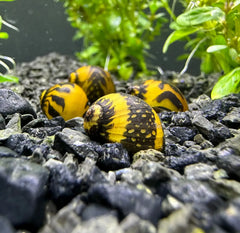
In contrast, Neritodryas snails often display a more bulbous, rounded, or "swollen" appearance near the aperture (the opening of the shell). The shell texture can feel marginally different, and they often sport highly intricate, jagged, or geometric patterning—such as the mesmerizing, high-contrast gold and black zig-zag lines found on the Lightning Bolt Nerite.
Size Dynamics
On average, most commercial Neritina species max out between one to one-and-a-half inches in diameter. Neritodryas species often stay slightly more compact or display a more uniform, rounded size, rarely exceeding an inch. This makes Neritodryas particularly attractive for nano aquascape setups where a larger snail might disrupt the sense of scale.
Behavioral Differences: The Aquatic Worker vs. The Amphibious Explorer
The most profound differences between these two genera lie in their behavior and lifestyle adaptations. This is where they function completely differently within an artificial ecosystem.
The True Aquatic Grazing of Neritina sp.
Neritina snails are fundamentally sub-aquatic creatures. While they will occasionally venture to the waterline to skim biofilm from the surface tension, they prefer to spend the vast majority of their time completely submerged. They crawl systematically across the substrate, glass, and wide plant leaves, moving with slow, deliberate precision. If a Neritina climbs completely out of the water, it is usually a sign of poor water quality or an accidental navigation error.
The Semi-Arboreal Nature of Neritidryas sp
Neritodryas snails are evolutionary transitionals. In the wild, they inhabit mangrove estuaries, freshwater streams, and tidal zones where they are frequently exposed to the open air. In fact, many Neritodryas species are known to climb up into the roots of trees and terrestrial vegetation out of the water to escape aquatic predators or find specific biofilms.
In the home aquarium, this translates to a snail that loves to explore the upper boundaries of the tank. A Neritodryas snail will regularly climb completely out of the water, resting on the rim of the tank, on top of floating plants, or on exposed pieces of hardscape. Because of this amphibious instinct, a tight-fitting lid is absolutely mandatory when keeping Neritodryas sp., as they will actively try to scale an open-top rim.
How They Function Differently in the Aquarium
Because of their behavioral divergence, these two genera fulfill different ecological niches within your tank layout. If you are trying to map out your entire tank's ecosystem, our comprehensive aquarium plants and cleanup crew guide provides an excellent breakdown of how to balance livestock with live plants.
Algae Specialization
Both snails are strictly herbivorous and will not touch healthy, living aquatic plants. However, their grazing styles vary:
-
Neritina sp. excels at clearing wide, flat surfaces. They are unmatched at cleaning vast panels of aquarium glass and the broad leaves of plants like Anubias or Amazon Swords. They are also known for tackling tougher, stubborn algae types like Green Spot Algae.
-
Neritodryas sp. functions more like an agile clean-up crew. Because they are slightly smaller and adapted to moving over complex, irregular root systems in nature, they excel at cleaning intricate hardscape. They are fantastic at navigating thin spiderwood branches, coarse dragon stone crevasses, and tightly packed aquascape layouts where a larger, heavier Neritina might tumble off. They are exceptional consumers of soft diatoms, film algae, and organic surface sludge.
The Synergy
If you run a standard aquarium filled to the brim, Neritina is the more reliable choice, as they stay underwater and focus their efforts where the algae is most prominent.
However, if you are designing a paludarium, riparium, or a shallow tank with exposed wood and rock, Neritodryas is the superior option. They bridge the gap between the aquatic and terrestrial sections of the setup, cleaning the damp, humid zones above the waterline where standard aquarium snails cannot survive, preventing mold and terrestrial biofilm buildup on exposed wood.
Breeding and Lifespan Realities
A common trait shared by both Neritina and Neritodryas is their reproductive biology. Both require brackish water to successfully hatch and raise their larval fry. If you keep them in a freshwater tank, they cannot overpopulate your aquarium.
However, their egg-laying habits can differ slightly in frequency. Neritina species are infamous for laying small, hard, white, sesame-seed-like egg capsules all over driftwood and rocks. While harmless, these eggs can be difficult to scrub off and are sometimes viewed as an eyesore by aquascapers. Neritodryas snails, while still capable of laying these capsules, are often reported by hobbyists to be slightly less prolific egg-layers in pure freshwater environments, making them a cleaner choice for pristine display tanks.
In terms of longevity, both genera are remarkably long-lived for small invertebrates if provided with adequate calcium to support shell health. A healthy Neritina can easily live for two to three years, while certain Neritodryas species like the Lightning Bolt have been known to thrive for up to four years in mature, stable systems.
Which One Fits Your Tank?
Choosing between Neritina sp. and Neritodryas sp. comes down to your specific aquarium architecture and maintenance needs.
-
Choose Neritina sp. if: You have an open-top aquarium, struggle with heavy green spot algae on your glass, or have a traditional planted tank where you want your clean-up crew to stay firmly beneath the surface.
-
Choose Neritodryas sp. if: You have a fully secured, lidded aquarium, want a rare and visually striking geometric shell pattern, own a nano tank, or are running a paludarium setup where an amphibious snail can explore both land and water.
Freshwater Aquarium Care Guides
Shop related: All nerite snails, Aquarium plants, Driftwood, Water Care.
Other blogs: Shipping aquarium snails: Why the paper towel method has an edge, Nerite snail care guide: The best algae eater for your tank, Why snails are essential for a self-sustained ecosystem, Which snail pack is best for a balanced aquarium.