

Setting up a brand new planted tank is an exciting milestone, but it almost always comes with an unwelcome guest: algae blooms. Whether it’s brown diatoms coating your substrate, soft green hair algae clinging to hardscape, or cloudiness in the water column, new tanks are uniquely vulnerable.
Why? During the first 4 to 8 weeks, a new aquarium is unstable. Nitrifying bacteria colonies are still establishing, substrate nutrients leach into the water column, and light hits empty spaces where plants haven't yet filled in. If you are starting a new tank from scratch, following a comprehensive freshwater aquarium setup guide will help you establish proper parameters early on.
The single most effective, natural way to prevent algae from taking over a new aquarium is to fill it with fast-growing aquatic plants.
How Fast-Growing Plants Stop Algae Before It Starts
Algae and aquatic plants rely on the exact same three core resources to survive:
-
Nutrients (Nitrate, Phosphate, Ammonia, and trace minerals)
-
Light
-
Carbon Dioxide (CO2)
Because algae are simple, single-celled or basic multicellular organisms, they exploit excess nutrients faster than slow-growing plants like Anubias or Bucephalandra.
Fast-growing stem and floating aquatic plants level the playing field. They act as nutrient sinks, rapidly absorbing excess ammonia, nitrates, and phosphates out of the water before algae spores can utilize them. Floating plants go a step further by shading the water column, starving submerged algae of light.
Detailed Breakdown of the Top 10 Plants
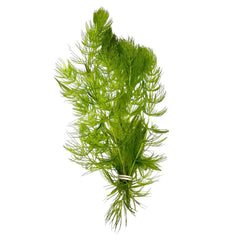
1. Hornwort (Ceratophyllum demersum)
-
Growth Speed: 1–5 inches per week
-
Placement: Floating or Background
-
Care Level: Very Easy (CO2 required)
-
Best Used For: Nutrient absorption, new tank setups, fry protection
Hornwort is widely considered the undisputed champion of fast growth and nutrient uptake. Because it lacks true roots, Hornwort absorbs 100% of its nutrients directly from the water column.
Algae-Fighting Superpower: Hornwort exhibits allelopathy—it releases natural biochemical compounds into the water that inhibit the growth of cyanobacteria (blue-green algae) and green water algae. You can anchor it gently in substrate or let it float freely.
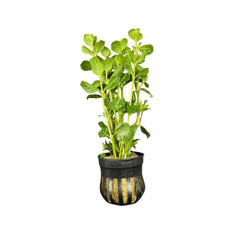
2. Water Wisteria (Hygrophila difformis)
-
Growth Speed: Very Fast
-
Placement: Midground / Background
-
Care Level: Easy (No CO2 required)
-
Best Used For: Filling large background spaces, absorbing nitrates
With its lace-like, feathery green leaves, Water Wisteria adds texture while growing aggressively. A single stem can produce multiple side shoots within days under decent lighting.
Algae-Fighting Superpower: Its high leaf surface area allows it to process high quantities of ammonia and nitrates. When trimmed, simply replant the top cuttings into the substrate to double your plant volume for free.
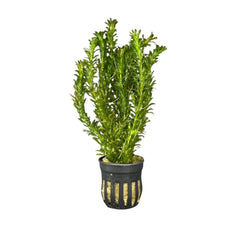
3. Anacharis / Brazilian Waterweed (Egeria densa)
-
Growth Speed: Extremely Fast
-
Placement: Background
-
Care Level: Very Easy (No CO2 required)
-
Best Used For: Cold or warm water tanks, high-nutrient cycling tanks
Anacharis is a classic staple in the aquarium hobby. Its thick whorls of green leaves create dense underwater forests that act as natural water purifiers.
Algae-Fighting Superpower: Anacharis consumes massive amounts of dissolved organics and waste products like ammonium. It also secretes natural antibiotic substances that suppress algae growth.
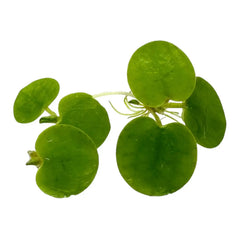
4. Amazon Frogbit (Limnobium laevigatum)
-
Growth Speed: Doubles population every 1–2 weeks
-
Placement: Floating
-
Care Level: Easy (No CO2 required)
-
Best Used For: Surface shading, nitrate extraction, shrimp & betta tanks
Floating plants have a distinct advantage over underwater plants: they have direct access to atmospheric CO2, allowing them to grow at breakneck speed regardless of CO2 levels in the water column. Amazon Frogbit features smooth, rounded leaves and long trailing roots.
Algae-Fighting Superpower: The long root system acts like a sponge for dissolved nitrates, while its thick surface canopy starves lower-level algae of light.
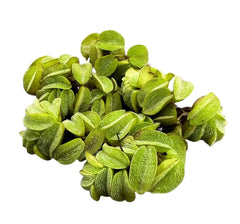
5. Salvinia Minima
-
Growth Speed: Fast
-
Placement: Floating
-
Care Level: Very Easy (No CO2 required)
-
Best Used For: Light diffusion, small to medium aquariums
Unlike Frogbit, Salvinia features smaller, fuzzy leaves that stay compact. It forms a lush, velvet blanket across the surface without dropping excessively long roots that obstruct your view.
Algae-Fighting Superpower: Perfect for controlling light intensity in tanks equipped with powerful modern LED lights, which are often the root cause of hair algae and green water.
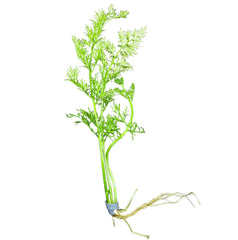
6. Water Sprite (Ceratopteris thalictroides)
-
Growth Speed: Very Fast
-
Placement: Floating or Background
-
Care Level: Easy (No CO2 required)
-
Best Used For: Floating or midground planting, fry cover
Water Sprite is an incredibly versatile fern species. You can plant its root crown in the substrate or leave it floating on the water's surface.
Algae-Fighting Superpower: It produces small plantlets directly along its older fronds. This rapid cellular division demands high amounts of phosphate and nitrogen, depriving algae of its core food source.
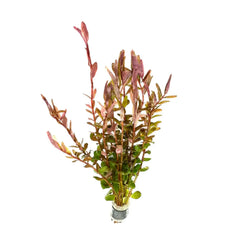
7. Rotala Rotundifolia (Rotala rotundifolia)
-
Growth Speed: Fast (1–2 inches per week)
-
Placement: Background
-
Care Level: Easy to Medium (CO2 optional)
-
Best Used For: Background aquascaping, adding red/pink highlights
If you want a fast grower that also brings high-end aquascaping aesthetics, Rotala rotundifolia is the perfect choice. Under moderate to strong lighting, its delicate leaves turn shades of orange, pink, and red.
Algae-Fighting Superpower: When planted in dense groupings (10–20 stems together), Rotala establishes quickly and forms a wall of stem tissue that soaks up water column fertilizers.
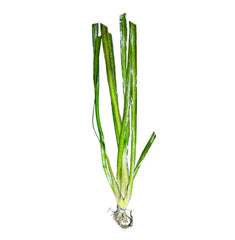
8. Jungle Vallisneria (Vallisneria americana)
-
Growth Speed: Moderate start, then Explosive
-
Placement: Background
-
Care Level: Very Easy (No CO2 required)
-
Best Used For: Background grass effects, tall/deep aquariums
Jungle Val produces long, ribbon-like leaves that flow with water current. Once settled into the substrate, it sends out underground runners aggressively.
Algae-Fighting Superpower: A single mother plant can produce dozens of offshoots within weeks. As the long leaves reach the surface, they bend and shade the tank, offering both root-zone nutrient uptake and surface shading.
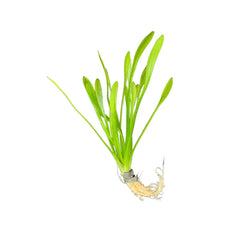
9. Dwarf Sagittaria (Sagittaria subulata)
-
Growth Speed: Fast
-
Placement: Foreground / Carpet
-
Care Level: Easy (No CO2 required)
-
Best Used For: Low-tech foreground carpets
Most carpet plants (Monte Carlo, Cuba, Hairgrass) are slow, demanding, and prone to algae infestation in new setups. Dwarf Sagittaria is the exception. It is one of the few carpeting plants that grows rapidly without demanding injected CO2.
Algae-Fighting Superpower: It covers bare substrate quickly, preventing algae from establishing a foothold on open soil or sand.
10. Brazilian Pennywort
-
Growth Speed: Fast
-
Placement: Any / Floating
-
Care Level: Very Easy (No CO2 required)
-
Best Used For: Vines, foreground creeping, floating mats
Brazilian Pennywort features bright green, lily-pad-shaped leaves that sprout roots at every node. It can be planted in substrate, trained to creep over driftwood, or left as a floating vine.
Algae-Fighting Superpower: Extremely adaptable and hardy, Pennywort thrives in almost any lighting condition and pulls nutrients directly through its water roots.
3 Essential Tips for Using Plants to Fight Algae
Having fast-growing plants in your tank is half the battle; how you manage them during the first month completes the strategy.
1. Plant Heavily from Day 1
Do not start a new aquarium with just 2 or 3 small plant pots. The "Dutch style" rule of thumb for preventing algae is to plant at least 50% to 70% of the substrate floor on Day 1.
2. Practice Active Pruning (Nutrient Export)
As fast-growing plants absorb nitrates and phosphates, those nutrients become locked inside the plant tissue. When you trim overgrown stems and remove excess floating plants from the tank, you are physically removing those nutrients from your aquarium ecosystem forever.
3. Adjust Light Intensity & Duration
In a new tank without established plant mass, running aquarium lights for 10–12 hours is an invitation for algae.
-
Keep lighting duration to 6–7 hours per day for the first 4 weeks.
-
Increase lighting slowly by 30 minutes every 2 weeks as your fast-growing plants fill out.
Algae is a natural part of every aquatic ecosystem, but severe outbreaks are a sign of imbalance. By introducing fast-growing stem plants and floating species from day one, you establish a powerful biological filter that starves algae before it can take over your aquascape.
Freshwater Aquarium Care Guides
Shop related: Aquatic Plants, Plant Fertilizers.
Other blogs: Why are my aquarium plants dying, Do red aquarium plants really need co2 and strong lighting, How many hours of light do aquarium plants really need, Top 5 best foreground plants for beginner, How to get rid of black beard algae, Is a Week Aqua Light a Long-Term Investment for Serious Aquascaping?, What Makes the Week Aqua L Series Unique Among Aquarium Lights?.